
🌿 Stories carved by wind and water
Giant Kelp Rafts Carry Marine Communities Offshore
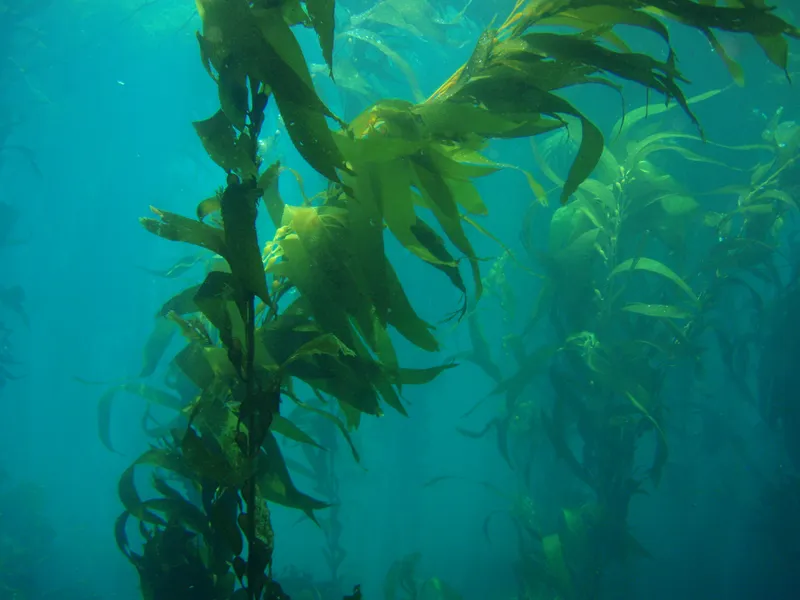
- What: Detached giant kelp can act as a floating habitat, carrying holdfast-dwelling animals like limpets and barnacles as it drifts and sometimes helping coastal species disperse.
- Where: Pacific and Southern Hemisphere kelp systems, including offshore waters and distant shorelines.
- When: When giant kelp tears free during storms or heavy surf.
A detached giant kelp plant is not just drifting seaweed. It can become a floating habitat, carrying much of the community attached to its holdfast into new waters far from shore.
Holdfast Life on Kelp Rafts
That matters because giant kelp does not break away alone. The holdfast, the root-like structure that anchors kelp to rock, is full of life. Small animals live on and inside it, and some stay with the kelp after it tears free. As currents move the raft, those hitchhikers move too.
One of the clearest examples comes from species that are tightly tied to kelp itself. Kelp limpets can remain attached to the blades and stipes, grazing as the raft drifts. Goose barnacles may also settle on floating kelp, especially after it has spent time at sea. Instead of a single plant crossing the ocean surface, the raft functions more like a compact traveling patch of habitat.
Offshore Transport by Detached Kelp
This kind of rafting has been observed in kelp systems in the Pacific and Southern Hemisphere, where large brown algae regularly detach during storms or heavy surf. Once free, some rafts stay near the coast. Others are carried well offshore by currents and winds. Most do not found new populations. Many dry out, sink, or arrive in places where the attached species cannot survive. But transport itself is real, and in marine ecology that movement is important.
How Kelp Rafting Spreads Species
The consequence is simple: detached kelp can connect places that seem isolated. It gives coastal species a way to cross distances they could not swim or crawl on their own. Over long periods, rare successful arrivals may help explain how some shoreline organisms spread between separated coasts or islands.
So when a giant kelp plant tears loose, the result is not just floating debris. It is a drifting holdfast community: limpets, barnacles, and other small organisms traveling with a living structure that can carry them into distant offshore waters, and sometimes all the way to a new shoreline.
Did You Know?
Giant kelp can grow very fast, which helps explain how large floating rafts can form after pieces break away.