
🌍 Records from the halls of power
Great Molasses Flood in Boston Killed 21 People
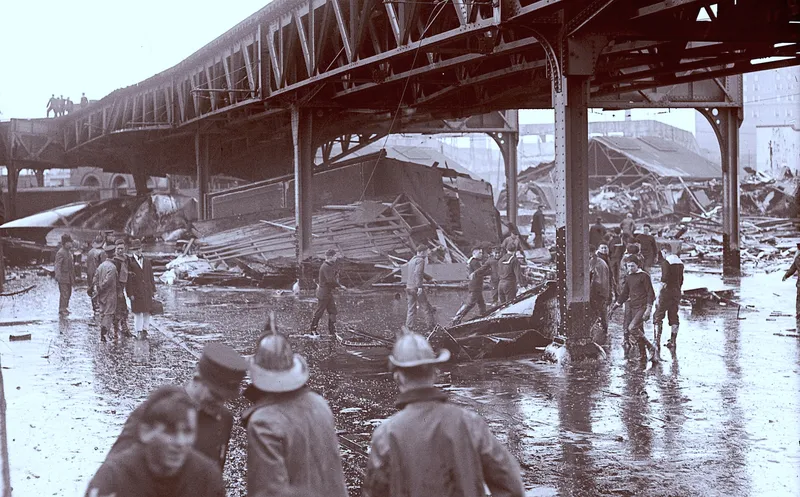
- What: The Great Molasses Flood was a deadly industrial disaster in which a ruptured storage tank released a wave of molasses that killed 21 people and injured about 150.
- Where: Boston’s North End, especially Commercial Street and nearby blocks.
- When: January 15, 1919.
A city street in Boston turned dark and heavy in seconds. On January 15, 1919, in the North End, a huge storage tank burst and released a massive surge of molasses into the neighborhood.
How the Molasses Flood Happened
The Great Molasses Flood was not a metaphor or a minor spill. Witnesses described a wave of molasses rushing through Commercial Street and nearby blocks, reaching as high as 25 feet in some accounts. It tore apart parts of buildings, pushed aside carts and debris, and trapped people and horses in a thick moving mass that was far more dangerous than its slow reputation would suggest. By the end, 21 people were dead and around 150 were injured.
The event began with an industrial failure. The tank, owned by the Purity Distilling Company, held millions of gallons of molasses used for industrial alcohol production. When it gave way, the force came from the sheer volume and weight of the liquid. In winter cold, molasses sounds like something that would barely move, but under pressure and released all at once, it became a destructive flood before thickening as temperatures and conditions changed.
Cleanup After the Boston Disaster
The aftermath was unusually difficult. Rescue workers and residents were not only dealing with wreckage and injury, but with a substance that coated everything it touched. Streets, walls, tools, and clothing became sticky. Cleanup stretched far beyond the initial disaster. Crews used salt water to wash the area, and sand was brought in to help people move across the slick ground. The harbor reportedly turned brown for a time as runoff carried molasses away.
Legal Impact and Industrial Safety
The flood also had consequences beyond the physical damage. A long legal fight followed, and the case became an early example of large-scale corporate accountability being tested through investigation and testimony. It pushed attention toward industrial safety at a moment when rapidly expanding infrastructure was not always matched by careful oversight.
What makes the Great Molasses Flood endure in memory is how ordinary the setting was. This was a working Boston neighborhood, not a battlefield or a storm zone. Yet one ruptured tank transformed it into a deadly industrial disaster, and even after the wave passed, the city was left with a more stubborn problem: streets and buildings coated in tons of molasses that could not simply be swept away.
Did You Know?
The tank’s collapse became the subject of one of the earliest major U.S. industrial safety cases to test corporate accountability in court.