
🌿 Stories carved by wind and water
Yakushima Cedar Tree Hollows Hold Tiny Aquatic Worlds
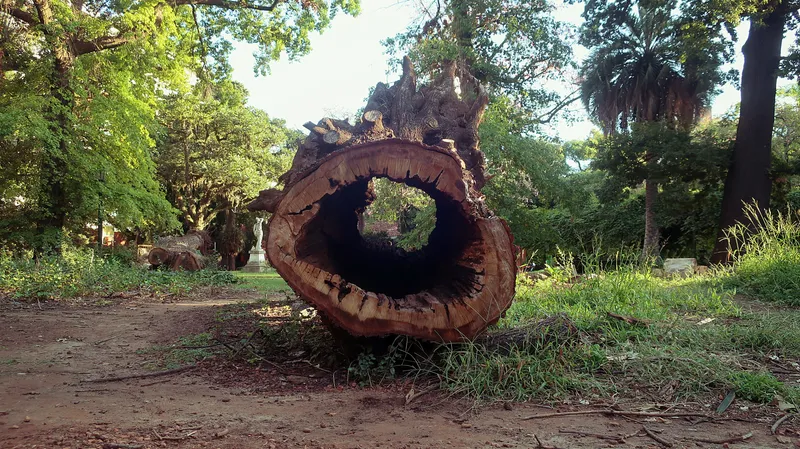
- What: In Yakushima’s cedar forests, rain-filled hollows in old trees and rotting stumps can form long-lived phytotelmata that support isolated freshwater communities of insects and other invertebrates.
- Where: Yakushima, southern Japan.
- When:
Inside Yakushima’s old cedar forests in southern Japan, some of the smallest ponds are not on the ground at all. They sit in rain-filled hollows, rotting stumps, and cavities in ancient trees, where water can collect and remain long enough to support aquatic life.
Phytotelmata in Cedar Hollows
These tiny containers are called phytotelmata: small bodies of water held by plants or plant structures. In Yakushima, a wet island known for heavy rainfall and old-growth cedar stands, those hollows can persist for years. A stump basin, a split trunk, or a depression in decaying wood becomes a stable freshwater pocket, cut off from streams and separated from the next pool by bark, height, and distance.
The result is an unusual habitat. Instead of fish or frogs, these miniature waters tend to host insects and other invertebrates adapted to life in very small spaces. Larvae can feed on decaying plant matter, algae, microbes, or even each other, depending on the species present. Because each pool is isolated, the community inside one cedar hollow may differ from the community in another only a short distance away.
Isolated Freshwater Ecosystems
That isolation is part of what makes these habitats scientifically useful. They are small enough to study closely, but complex enough to show how freshwater ecosystems assemble and persist. A long-lived tree hollow can function like a natural test chamber: rain comes in, leaves fall, wood breaks down, oxygen levels shift, and small animals colonize, compete, and reproduce. The scale is tiny, but the ecological processes are familiar.
Yakushima adds another layer of context. The island’s cedar forests are often discussed for their age, rainfall, and protected status, yet these suspended pools show that forest biodiversity is also built from overlooked structures inside the trees themselves. Not every hollow becomes a lasting aquatic habitat, and the exact mix of species can vary with size, height, decay, and how often water is replenished. But where the water holds, life organizes around it.
Old Cedar Trees and Biodiversity
So the core fact is concrete: in Yakushima’s cedar forests, a rain-filled stump or trunk hollow can act as a long-lived freshwater habitat high in a rainforest forest. Protecting an old tree in a place like this does not only preserve bark and wood. It can also preserve a set of tiny, isolated pools that function as real aquatic ecosystems.
Did You Know?
Phytotelmata are also found in places like bromeliads, pitcher plants, and even bamboo internodes.