⚙️ Traces from the dawn of innovation
Palm Graffiti Defined PDA Writing Despite a Patent Fight
- What: Palm Graffiti was a stylized unistroke handwriting system that helped make text entry practical on early Palm PDAs until legal pressure led to Graffiti 2.
- Where: On Palm handheld devices, especially the PalmPilot.
- When: Late 1990s to 2003.
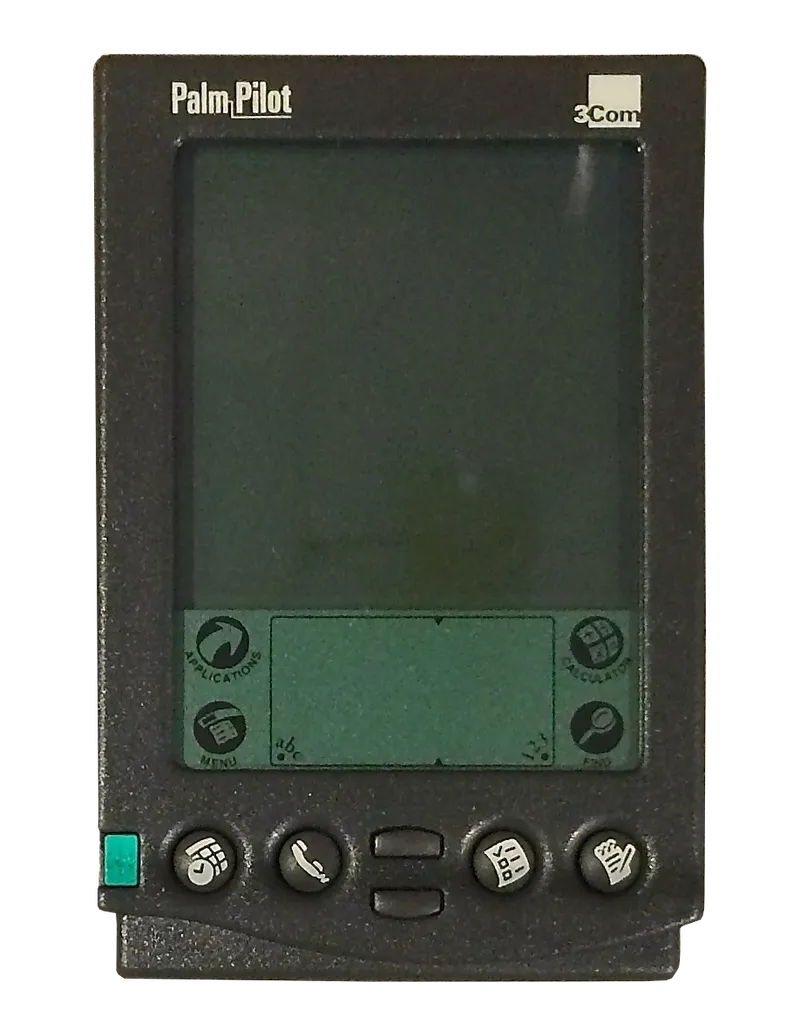
Palm Graffiti became the way millions of people wrote on early PDAs, even though the system was shaped by legal limits from the start. In the late 1990s, if you owned a PalmPilot or another Palm device, writing often meant learning a simplified alphabet and drawing one character at a time in a small box at the bottom of the screen.
That was the tradeoff Palm made work. Instead of trying to recognize ordinary handwriting, Graffiti asked users to adapt. Most letters were reduced to single, clean strokes. The input area was split for letters and numbers. You did not scribble naturally. You performed a compact, standardized motion, and the device turned it into text with surprising reliability.
Origins of Palm Graffiti
The idea did not appear out of nowhere. Graffiti was not based on technology from an acquisition or a Palm partner system. More precisely, the broader concept was clearly related to Xerox PARC's earlier Unistrokes work by David Goldberg and Catherine Goodisman. Palm did not invent the underlying category of unistroke handwriting, but it turned that idea into a mass-market habit.
Xerox Patent Fight and Graffiti 2
Then came the conflict that changed the product. Xerox sued Palm over patent infringement tied to unistroke input methods. Palm initially fought the case, but Xerox ultimately prevailed on appeal. By 2003, Palm replaced the original Graffiti with Graffiti 2, a revised system that used more natural letter shapes and allowed some multi-stroke characters. It was a practical response to a legal constraint, but it also changed the feel of the device.
Why Graffiti Defined PDA Input
What matters is not just that Graffiti was replaced. It is that a constrained system still won everyday use. Palm succeeded by making users learn a small artificial writing language because the payoff was speed, consistency, and low computing overhead on small hardware. The input method fit the limitations of the machine so well that it became normal.
That is the concrete legacy of Palm Graffiti. For years, text entry on a PDA meant stylus down, one stroke, one letter, one tiny gesture at a time. Even after the Xerox dispute forced Palm to move to Graffiti 2, the original system had already defined how handheld computing felt in practice: not voice, not full keyboards, but a learned set of pen movements millions used every day.
Did You Know?
Graffiti was designed so most letters could be written with a single stroke, which helped users enter text quickly despite the limited processing power of early handhelds.