
🚀 Whispers from the silent cosmos
Ariane 5 Flight 501: How a Software Overflow Destroyed It
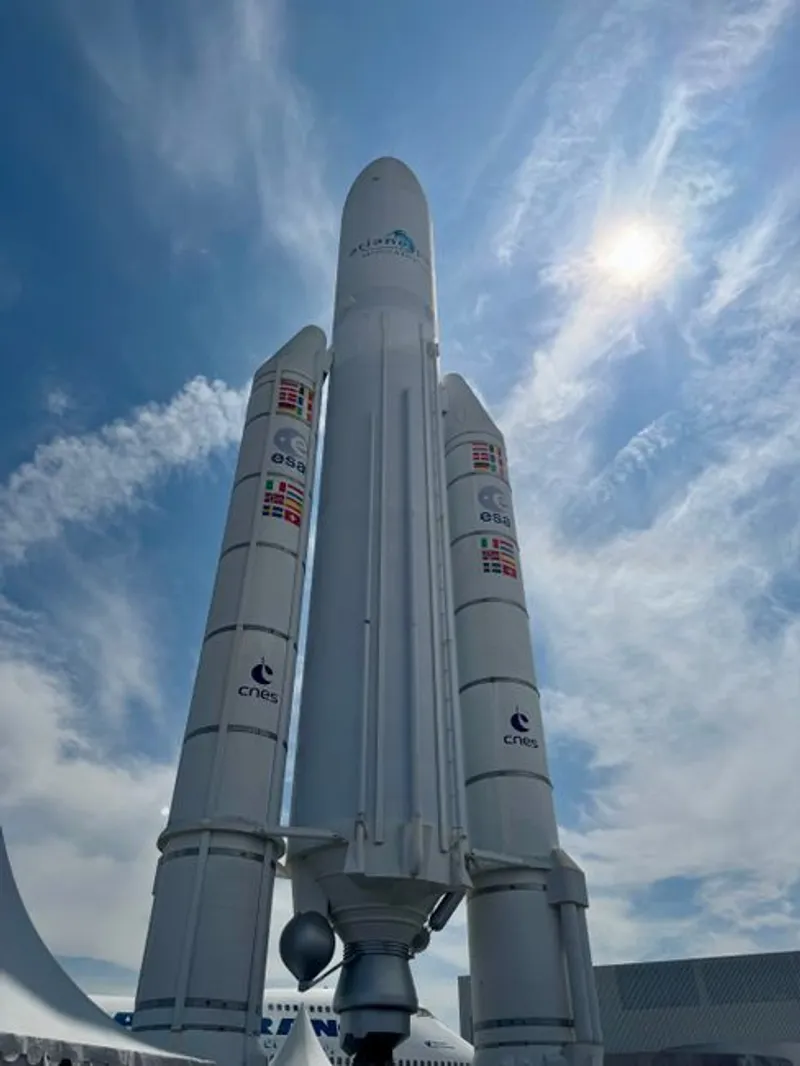
- What: Ariane 5 Flight 501 failed seconds after liftoff because reused guidance software overflowed, produced invalid data, and led to the rocket’s destruction.
- Where: Kourou, French Guiana.
- When: June 4, 1996.
On June 4, 1996, Ariane 5 Flight 501 lifted off from Kourou, French Guiana, and broke apart less than 40 seconds later. The rocket did not suffer a fuel explosion or a structural collapse at launch. It was destroyed after its own guidance system failed and sent bad steering data; range safety then issued a destruct command.
Ariane 5 Launch Failure Sequence
The sequence was brutally fast. About 37 seconds after liftoff, the rocket began veering. The onboard computer interpreted faulty data as real flight information and commanded extreme nozzle movements. Ariane 5 started to rotate and yaw beyond its safe limits. Aerodynamic forces built up quickly, and the vehicle disintegrated. Range safety then activated the destruction system.
The failure traced back to software used in the inertial reference system, a critical part of the rocket’s guidance and navigation. That software had been adapted from Ariane 4, an older launcher with a different flight profile. One part of the code tried to convert a 64-bit floating-point number into a 16-bit signed integer. During Ariane 5’s ascent, the value was larger than the software expected. The conversion overflowed.
Software Overflow in Guidance System
That might sound like a narrow programming bug, but the consequences were immediate. The inertial reference system shut down after the overflow. A backup unit was running the same software and failed in the same way almost simultaneously. Worse, diagnostic data from the failed unit was then treated by the flight computer as valid flight data. The rocket responded to nonsense information as though it were real guidance input.
The deeper issue was not simply “old code.” It was an assumption carried over from Ariane 4: that a certain variable would stay within a safe range during flight. On Ariane 5, that assumption no longer held because the newer rocket had different acceleration and trajectory characteristics. Some of the relevant software was also still operating after launch even though it mainly existed for pre-launch alignment, which increased exposure to a failure mode that no longer made sense to keep active.
Why Reused Ariane 4 Code Failed
The Flight 501 investigation became one of the clearest examples of how software reuse can fail when the original operating context changes. The code itself was not random or careless; it had worked before. The disaster came from treating proven software as universally safe without fully revalidating its assumptions under the new vehicle’s conditions.
The concrete result was the loss of a rocket and payloads worth hundreds of millions of dollars, within seconds of launch, because one numeric conversion was left vulnerable inside reused guidance software. Ariane 5 Flight 501 is still cited for a specific reason: a single inherited software assumption turned a routine launch into a catastrophic failure almost immediately.
Did You Know?
The Ariane 5 failure is often used in software engineering as a case study in the danger of reusing code without rechecking its assumptions for a new operating environment.