
🌿 Stories carved by wind and water
5 Plants That Move Faster Than You'd Expect
- What: This list highlights plants capable of extremely rapid movements and explains that they use different mechanical strategies for hunting prey or aiding reproduction.
- Where: Various terrestrial and aquatic environments worldwide.
- When: Present-day plant biology.
Plants are supposed to sit still. That is the whole stereotype. But some of the fastest movements in nature happen in leaves, traps, and flowers that can fire in milliseconds.
These five plants move for very different reasons. Some trap prey. Some launch pollen onto visiting insects. And the wild part is that each solves speed in a different mechanical way.
1. Venus flytrap
The Venus flytrap, Dionaea muscipula, is the classic shocker. Touch two trigger hairs within a short window, and the trap can snap shut in well under a second.
What makes it so surprising is the sequence: an electrical signal runs through the leaf, then the lobes suddenly buckle and close around the insect. It looks like a jaw, but it is really a leaf using a rapid mechanical switch.
2. Waterwheel plant (Aldrovanda)
Aldrovanda vesiculosa takes the flytrap idea underwater. This aquatic carnivorous plant snaps shut on tiny prey in mere milliseconds.
That speed matters because water resists movement. A trap that fast gives small aquatic animals almost no time to escape. It is one of the clearest examples that rapid plant motion is not just a land-plant trick.
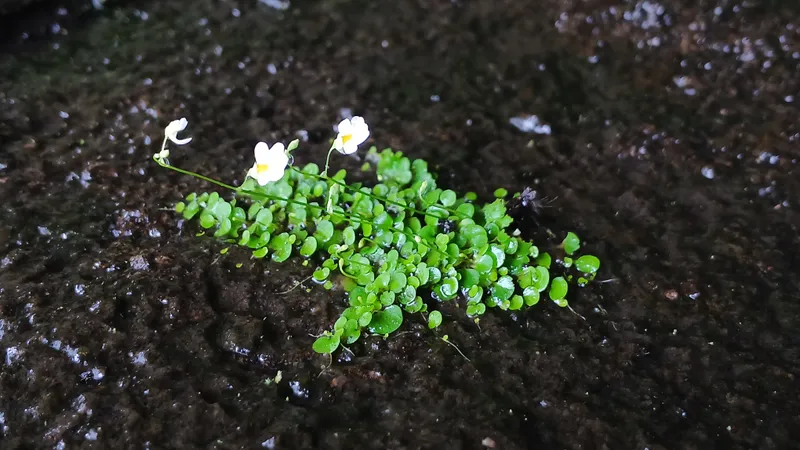
3. Utricularia (bladderwort)
Bladderworts, in the genus Utricularia, may be the most extreme entry here. Their tiny traps are suction-powered, and when they fire, prey is sucked in within a few milliseconds.
This is not a slow curl or gradual fold. It is a sudden suction event, often described as the fastest plant suction known. The mechanism is completely different from that of a snapping leaf, which is exactly what makes it so fascinating.
4. Triggerplants (Stylidium)
Triggerplants in the genus Stylidium are not hunting insects for food. Their speed serves reproduction. When an insect lands, the flower’s column can catapult forward and hit the visitor with pollen.
The motion happens in tens to hundreds of milliseconds. Instead of trapping prey, the plant turns contact into precise pollen placement. Same shock value, totally different purpose.
5. Snap-tentacle sundews (Drosera glanduligera)
Drosera glanduligera adds another twist. This sundew uses snap-tentacles that can catapult prey onto the sticky surface of the leaf in tens of milliseconds.
That combination is the surprise: one part moves fast, another holds fast. The snap gets the insect onto the adhesive trap, and the sticky leaf does the rest. It is a two-step system packed into one small carnivorous plant.
Together, these plants show that speed in nature is not just about muscles and nerves. In leaves, bladders, floral columns, and tentacles, evolution has found multiple ways to make still-looking organisms move with startling force.
Did You Know?
The Venus flytrap is native to a small region of North and South Carolina in the United States.