
🕯️ Notes from the casefile
John Dillinger Escape: How a Bluff Broke Crown Point Jail
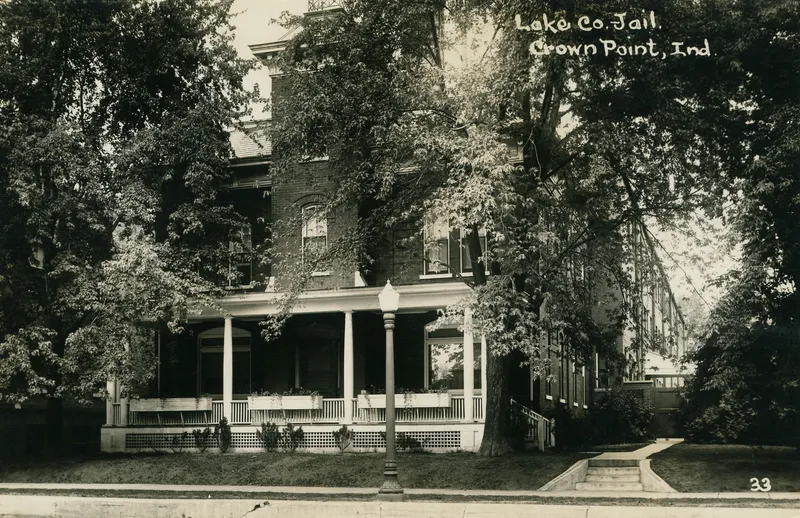
- What: John Dillinger escaped from the Crown Point, Indiana jail on March 3, 1934 by bluffing guards into believing he had a gun, an episode that exposed major security failures and helped intensify the federal manhunt.
- Where: Crown Point, Indiana; he then crossed into Illinois.
- When: March 3, 1934, during the early 1930s era of federal pursuit of Dillinger.
On March 3, 1934, John Dillinger walked out of the jail in Crown Point, Indiana, after convincing guards he had a gun. The striking detail, repeated for decades, is that the weapon was reportedly a wooden pistol darkened with shoe polish. That part is widely cited, but no definitive proof survives that the gun was exactly that.
Crown Point Jail Escape
What is clear is the result. Dillinger, already one of the most wanted men in the United States, overpowered guards, locked up jail staff, and escaped from a facility local officials had described as secure. He then took the sheriff's car and crossed state lines into Illinois, a move that helped intensify federal involvement in the case.
The escape is often remembered for the alleged fake gun, but the more revealing part is how much depended on bluff and hesitation. A jail is supposed to be built around layers of control: locked doors, trained staff, routine, and backup. At Crown Point, those layers failed quickly. Whether Dillinger used a carved wooden pistol, some other improvised object, or exploited confusion in another way, the staff in front of him believed he could kill them. That belief was enough.
How the Bluff Worked
There was also context behind the embarrassment. Crown Point had gained a reputation in the press as an "escape-proof" jail. Dillinger's breakout punctured that claim in a matter of minutes. It was not just a personal escape. It was a public demonstration that official confidence and actual security were not the same thing.
That consequence mattered. By stealing a car and crossing state lines, Dillinger triggered a stronger federal basis to pursue him. The escape did not make him safer for long; it widened the hunt. It also added to the growing pressure on law enforcement to modernize how it handled high-profile criminals in the early 1930s.
Federal Impact of the Escape
So the lasting image from Crown Point is not really a clever prop. It is a county jail in Indiana, on a March day in 1934, being undone by a simple bluff that exposed just how vulnerable it was.
Did You Know?
Dillinger’s escape was one of the incidents that led to a stronger federal basis for pursuing him after he crossed state lines.