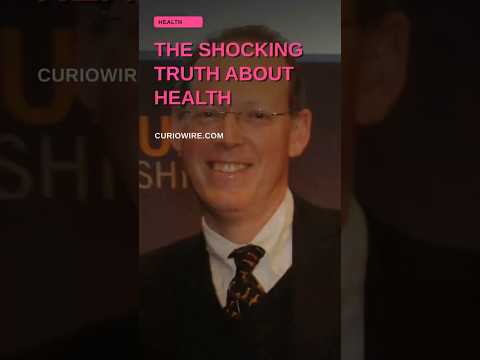
🫀 Secrets of the human vessel
Paul Farmer's Quote on Why Global Health Fails
The idea that some lives matter less is the root of all that is wrong with the world
- Who: Paul Farmer, physician and co-founder of Partners In Health.
- Where: In his speeches and writing about global health and inequality.
- When: During decades of debate over global health policy.
- Why: The line mattered because it framed unequal medical outcomes as moral choices, not just technical failures, and became a defining statement of Farmer’s critique of global health inequality.
“The idea that some lives matter less is the root of all that is wrong with the world” became one of Paul Farmer’s defining lines because it compressed his entire critique of global health into a single sentence. Farmer, a physician and co-founder of Partners In Health, used it repeatedly in speeches and writing as he argued that unequal medical outcomes were not just technical failures. They were moral choices.
Global Health and Moral Choice
That context matters. Farmer was speaking during decades in which global health institutions, governments, and donors often treated poor patients in Haiti, Rwanda, Peru, and other places as if limited care were realistic, normal, or even inevitable. In those debates, the language of scarcity could sound practical. Farmer’s sentence cut through that. He was naming the hidden assumption beneath many policies: that the suffering of some populations counted less than the suffering of others.

The force of the quote comes from its wording. It does not begin with hospitals, budgets, or disease. It begins with an idea. Farmer was shifting the argument away from the excuse that bad outcomes were simply unfortunate facts of poverty. He was saying that before systems fail people medically, they often rank them morally. Once that ranking is accepted, lower standards of care start to look reasonable. Preventable deaths become routine. “Cost-effective” can become a way of defending abandonment.
Partners In Health in Practice
Partners In Health put that argument into practice. The organization became known for rejecting the claim that advanced treatment was unrealistic for the poor. Instead of accepting stripped-down care, it pushed to deliver serious treatment in places many experts had written off. That made the quote more than a slogan. It described a live dispute over what kind of medicine poor communities were thought to deserve.
The line resonated because it was both broad and precise. Broad, because people could apply it beyond medicine, to inequality, racism, and political neglect. Precise, because in Farmer’s work it referred to concrete decisions: who gets drugs, who gets clinics, whose pain is treated as urgent, and whose death is explained away as inevitable. In a field crowded with technical language, he offered a moral diagnosis in plain speech.
Why the Quote Endures
It is still remembered for the same reason. The sentence remains useful whenever health systems produce sharply unequal outcomes and then present them as natural. Farmer’s line does not solve those inequalities by itself, but it makes evasion harder. It demands that policy be read as a statement of value. In that sense, the quote endures because it gives a concrete test for global health: when care is unequal, ask which lives were quietly judged to matter less.
Did You Know?
The quote also became a shorthand for Partners In Health’s refusal to accept “good enough” care for poor communities.