
🌍 Records from the halls of power
Lalibela Rock-Hewn Churches Still Function as Living Sacred Sites
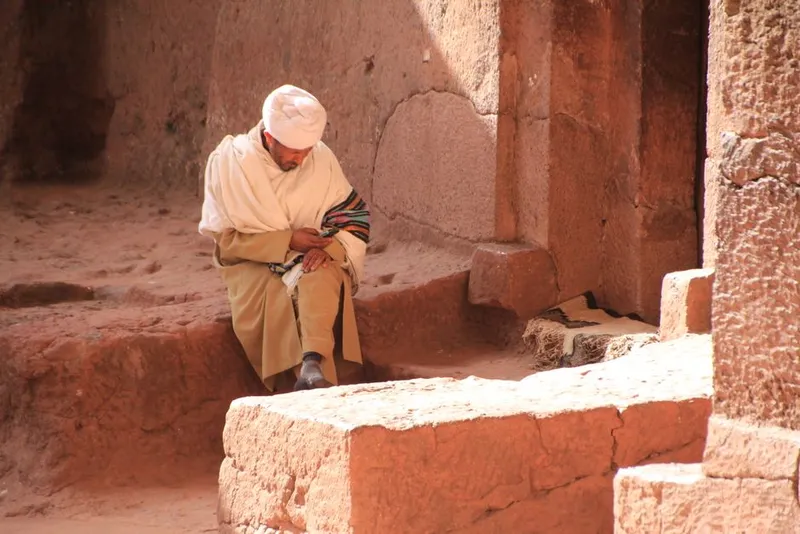
- What: Lalibela is a medieval Ethiopian rock-hewn church complex that remains an active place of worship rather than a finished historical ruin.
- Where: Lalibela, in northern Ethiopia.
- When: The churches are largely dated to the late 12th and early 13th centuries.
Most famous medieval monuments are visited as finished history. Lalibela, in northern Ethiopia, works differently. Its rock-hewn churches, largely dated to the late 12th and early 13th centuries, are not just preserved architecture. They remain active places of worship, where liturgy, pilgrimage, and daily religious life continue inside spaces cut directly from bedrock.
Lalibela’s Rock-Hewn Church Complex
That contrast is what makes Lalibela so striking. The churches are often described as a “New Jerusalem,” a sacred landscape associated with the reign of King Lalibela of the Zagwe dynasty. The idea, repeated in local tradition and historical writing, was to create a spiritually significant pilgrimage center in Ethiopia. Some details of the original planning and construction remain debated, and many stories around the site are legendary rather than provable. But the churches themselves are real, monumental, and unusually integrated into the ground: rather than being built up stone by stone, several were carved down into the living rock, then hollowed out to form interior spaces, passages, and courtyards.
Bete Giyorgis and Active Worship
The best-known example is Bete Giyorgis, or the Church of Saint George, with its cross-shaped plan sunk below ground level. Seen from above, it looks almost diagrammatic, as if a drawing had been cut into the earth and then turned into a building. But its impact is not only visual. Elsewhere in the complex, priests move through narrow trenches and doorways worn by centuries of use, and worshippers gather for services tied to the Ethiopian Orthodox Tewahedo Church’s calendar. White shawls, prayer, chant, and processions belong to the site as much as its stone surfaces do.
That continuity matters. Many discussions of monumental architecture separate the past from the present, treating old religious sites mainly as art, engineering, or archaeology. Lalibela resists that framing. It is a medieval architectural achievement, but it is also a functioning religious landscape with contemporary meaning. Its significance lies not only in how it was carved, but in the fact that people still use it for the purposes it was created to serve.
Lalibela as a Living Sacred Site
So the clearest way to understand Lalibela is not as a group of isolated monuments or abandoned ruins. It is a working complex where bedrock architecture and modern devotion occupy the same space, making the medieval churches of Lalibela part of the present tense, not only the past.
Did You Know?
The Lalibela churches are part of the UNESCO World Heritage List.