🫀 Secrets of the human vessel
Jonas Salk's Patent Quote and the Polio Vaccine
There is no patent. Could you patent the sun?
- Who: Jonas Salk.
- Where: In a television interview as the vaccine’s success was announced.
- When: April 1955.
- Why: It mattered because Salk framed the newly successful polio vaccine as a public good rather than private property, giving a widely shared scientific breakthrough a powerful civic meaning.
In April 1955, when the success of the polio vaccine was announced to the public, Jonas Salk gave the line that would follow him for the rest of his life: “There is no patent. Could you patent the sun?” The wording is often remembered in slightly different forms, but the meaning is clear. At the moment when his vaccine had just been declared safe and effective, Salk framed it not as private property but as something that should belong to everyone.
The 1955 Polio Vaccine Announcement
The setting mattered. Polio was one of the most feared diseases in the United States and beyond. It struck children, filled hospital wards, and left families terrified each summer. By 1955, the vaccine announcement was not just a scientific update. It was a national event charged with relief, pressure, and expectation. In that atmosphere, questions about control, production, and ownership were not technical side issues. They were central to what would happen next.
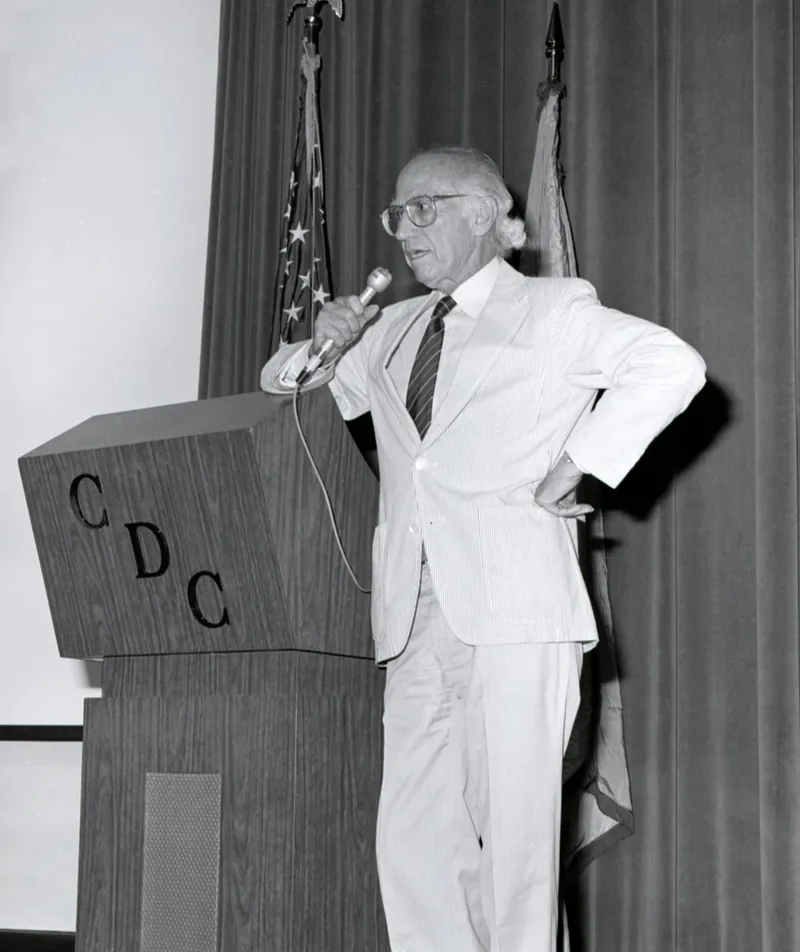
That is why Salk’s answer landed so strongly. A patent could have meant legal control over a product the public already saw as a shared victory, built through years of research, testing, and major support from the National Foundation for Infantile Paralysis. By refusing that frame, Salk presented the vaccine as a public good. The comparison to the sun made the point instantly. The sun is universal, life-giving, and beyond possession. In a few words, he turned an issue of intellectual property into a moral and civic image that ordinary listeners could understand immediately.
Why the Patent Quote Mattered
The quote also resonated because it matched the emotional tone of the moment. People were not listening as consumers deciding whether to buy an invention. They were listening as parents, patients, and citizens waiting for protection from a disease that had shaped daily life. Salk’s answer acknowledged that feeling without grandstanding. It suggested that some achievements, especially in public health, carry obligations larger than personal profit.
That does not mean the line settled every practical question. Manufacturing, distribution, and access still depended on institutions, companies, governments, and public trust. The quote did not eliminate those realities. What it did was define the vaccine symbolically at the instant the world was learning it worked. It gave the breakthrough a public language equal to its public stakes.
Legacy of Salk’s Quote
That is why the sentence endures. It is remembered not simply because it sounded noble, but because it arrived at exactly the point when the polio vaccine was moving from laboratory success to mass use. Salk’s remark fixed that transition in one concrete image: a medicine against a feared disease should be treated less like a possession than like sunlight, something meant to reach everyone.
Did You Know?
The article notes that the line is often remembered in slightly different forms.