
🎭 Fragments from the heart of civilization
Bayreuth Festspielhaus Orchestra Pit Changes How Wagner Sounds
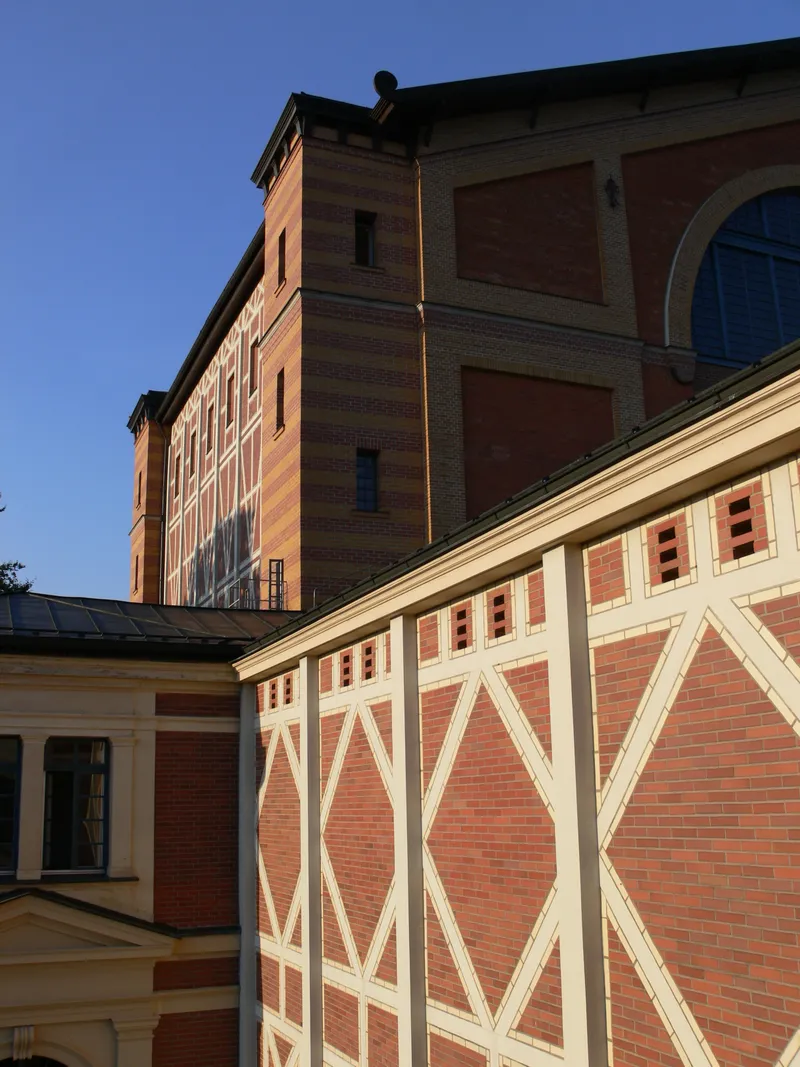
- What: The Bayreuth Festspielhaus was designed by Richard Wagner with a hidden, covered orchestra pit so the orchestra is heard more than seen and the music blends into the drama.
- Where: Bayreuth Festspielhaus, Bayreuth, Germany.
- When: Opened in 1876.
At the Bayreuth Festspielhaus in Germany, the orchestra is deliberately hidden. Richard Wagner designed the theater so the players sit beneath the stage in a covered pit, out of sight of much of the audience and largely out of sight of the singers too.
Bayreuth’s Hidden Orchestra Pit
That physical setup is the point. In most opera houses, the orchestra is visible in front of the stage, and its presence is part of the spectacle. At Bayreuth, opened in 1876 for Wagner’s own works, the pit is recessed and partially covered, sometimes described as a “mystic gulf.” The sound rises indirectly instead of hitting the audience in a straightforward blast, and the eye is pulled toward the drama onstage rather than toward moving bows, brass, and a conductor.
The design also changes what performers experience. Because the players are hidden below, singers cannot simply glance down and orient themselves the way they might in a conventional house. Conducting and coordination still happen, but the architecture makes the orchestra feel less like a visible partner and more like an unseen source of sound.
How the Pit Changes Sound
This was not a gimmick. Wagner wanted his operas heard as total stage works, with music serving the drama rather than competing visually with it. Hiding the orchestra helped produce a blended, veiled sonority that many listeners associate with Bayreuth. The effect is acoustic as much as theatrical: the sound reaches the hall after bouncing and mixing, softening edges and changing balance.
The larger consequence is that Bayreuth did not just host Wagner’s operas; it was built to control how they are perceived. The architecture tells the audience where to look, how directly to hear, and what to ignore. That is a powerful intervention in a theater building, and it explains why the Festspielhaus remains central to discussions of opera staging and sound design.
Why the Festspielhaus Matters
In concrete terms, the hidden pit means a performance at Bayreuth is not simply Wagner played in another venue. The same score enters the room differently: the orchestra is submerged, the singers occupy the visual field, and the theater itself becomes part of the sound.
Did You Know?
The Festspielhaus is still used for the annual Bayreuth Festival, which is dedicated primarily to Wagner’s operas.