
🧪 Echoes from the lab
7 Meteorites That Changed Research on Solar System Origins
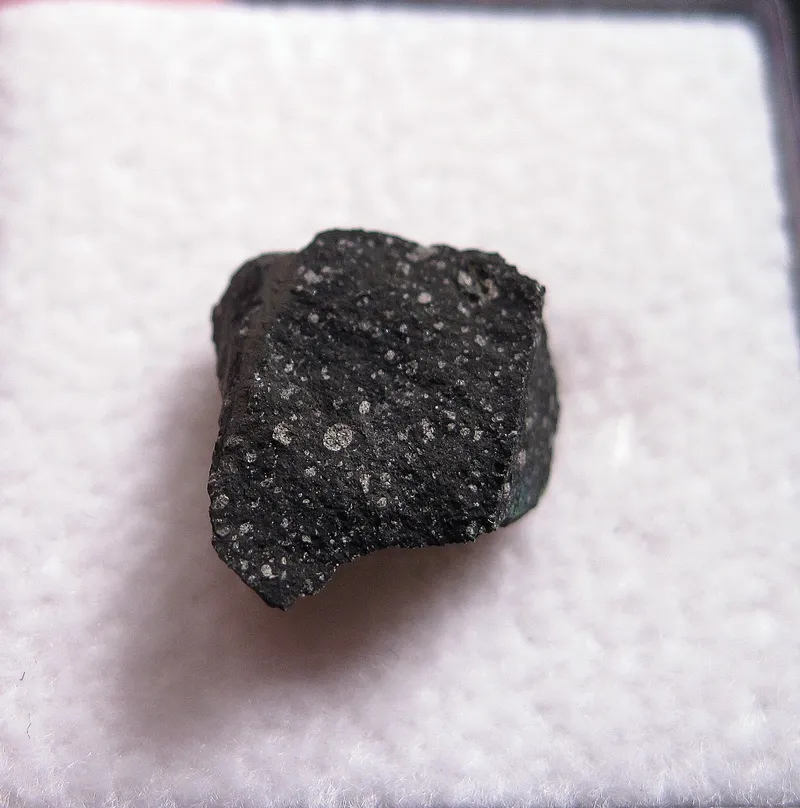
- What: This list highlights seven scientifically important meteorites that reshaped understanding of the early Solar System’s chemistry, isotopes, planetary formation, and the potential delivery of organic building blocks.
- Where: The Solar System, with meteorites recovered on Earth and one identified as originating on Mars.
- When: From the 19th century to modern planetary science, focusing on evidence from the Solar System’s earliest history.
Meteorites are more than space debris. Some have forced scientists to rethink what the early Solar System was made of and where the raw ingredients for planets and life may have come from.
These seven stones mattered because each brought back something concrete: amino acids, presolar grains, unusual isotopes, fragile carbon-rich material, or textures linked to planetary interiors. Together, they changed the story of the Solar System’s building blocks.
1. Murchison — a kitchen-sink of organics
Murchison fell in Australia and quickly became one of the most important carbonaceous meteorites ever studied. Its real shock was chemical: amino acids and thousands of organic compounds were found inside it.
That mattered because it showed that biologically relevant chemistry does not belong to Earth alone. Murchison turned a big idea into laboratory evidence: space rocks can carry complex organic material across the Solar System.
2. Allende — messenger of presolar dust
Allende delivered something even stranger than organics: tiny presolar grains locked inside its fragments. These microscopic particles predate the Solar System itself.
That made Allende a direct sample of stardust, not just early Solar System rock. Instead of treating ancient stellar material as purely theoretical, researchers could examine actual grains in the lab and connect meteorites to events that happened before the Sun formed.
3. ALH84001 — Mars’ controversial fossil hint
ALH84001, a Martian meteorite recovered from Antarctica, became famous for its carbonate globules and organic molecules. It triggered claims of possible nanofossils and signs of past Martian habitability.
The key word is controversial. There is no definitive proof of Martian life in this rock. But the debate changed planetary science anyway because it drove intense research into how meteorites can preserve chemical and textural clues about environments on other worlds.
4. Tagish Lake — an ultra-primitive carbon carrier
Tagish Lake fell in Canada as a cold, fragile meteorite rich in primitive carbonaceous material. Its chemistry stood out because the material was especially pristine and delicate.
That gave researchers a rare look at early Solar System carbon without as much overprinting as in more altered samples. Tagish Lake helped refine the map of which organic ingredients were present in the Solar System’s earliest stages.
5. Orgueil — the 19th-century carbonaceous surprise
When Orgueil fell in 1864, it did not just add another stone to a collection. This CI chondrite later proved notable for water-bearing minerals and insoluble organic matter.
Its importance grew over time because it fueled early arguments about extraterrestrial organics and contamination. Orgueil sat right at the boundary between discovery and doubt, making it a historical landmark in the study of carbon-rich meteorites.
6. Ivuna — rare isotopes in a fragile stone
Ivuna-type carbonaceous meteorites are known for unusual isotopic ratios and volatile-rich chemistry. Those signatures are not just odd details; they act like labels for ancient Solar System reservoirs.
That means Ivuna helped constrain how material was distributed in the early Solar System. Its chemistry and isotopes gave researchers a sharper way to compare primitive meteorites and trace where their ingredients may have formed.
7. Fukang pallasite — gem-like clues on planetary cores
Fukang looks almost unreal: transparent olivine crystals suspended in iron-nickel metal. But the beauty is not the main story. The texture has been interpreted as evidence for a core-mantle boundary environment in a small body.
That makes Fukang important for more than collectors. It offers a physical sample of how metal and silicate interacted during planetary differentiation, helping constrain the chemistry of early bodies as they separated into layered interiors.
From Australia to Antarctica to Canada, these meteorites did not just fall out of the sky. They carried evidence that the Solar System began as a chemically messy, isotopically diverse, and surprisingly life-friendly place.
Did You Know?
The Murchison meteorite fell near the Australian town of Murchison on September 28, 1969, about two months after Apollo 11’s Moon landing.