
🧩 Fragments from the unknown
Temple Copper Plates in India Land Disputes
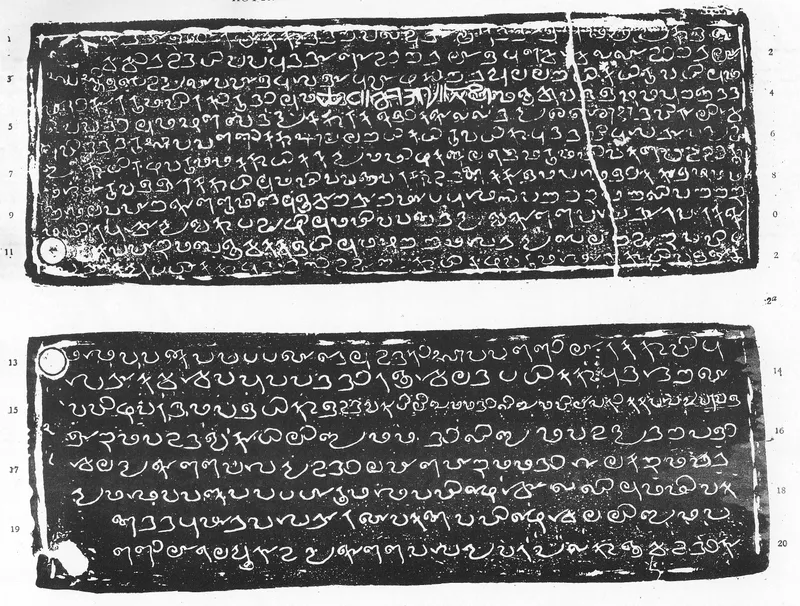
- What: Old copper-plate land grants can still serve as evidence in Indian property disputes because they record who received land, its boundaries, and related rights.
- Where: India, especially in temple treasuries, archives, and village land disputes.
- When: Medieval and later periods, with modern courts still considering them today.
The object at the center of some Indian land disputes is not a map, a survey file, or a typed registry entry. It is a copper plate, sometimes centuries old, kept in a temple treasury or archive and inscribed with a grant that records who received land, where its boundaries lay, and under what authority.
Copper Plate Land Grants
These copper-plate charters were issued by kings, local rulers, and other authorities across different parts of India over many centuries. Many survive because copper lasts, and because temples often preserved such records alongside other endowment documents. Inscriptions can name villages, fields, irrigation sources, tax exemptions, witnesses, and boundary markers. That level of detail is exactly why they still matter when a modern dispute turns on old rights.
How Courts Evaluate Inscriptions
When such a document appears in court, it is not treated like a relic with automatic power. Judges, lawyers, archivists, epigraphists, and revenue records all matter. The script has to be read correctly. Dates and names have to be identified. The plate’s chain of preservation may be examined. Most importantly, the inscription is usually weighed against later land records, settlement registers, and administrative documents. A copper plate can support a claim; it does not simply end the argument by itself.
Still, these plates have been produced in legal and administrative disputes to help establish the history of grants to temples, communities, or specific institutions. That can be crucial in villages where present-day possession, colonial-era paperwork, and local memory do not line up neatly. A line engraved long ago about a field boundary, a tax-free endowment, or a named hamlet can suddenly become relevant again in a modern rights dispute.
Temple Records in Modern Disputes
The consequence is striking but practical: a temple record preserved for ritual, property management, or institutional memory can outlast entire layers of paper administration. In some cases, the most durable evidence is not the newest document but the oldest one that can still be authenticated and connected to the land in question.
So the legal force here is concrete, not symbolic. A copper plate kept in an Indian temple may still matter because it preserves a specific land grant in durable metal, and in a village dispute over who held what rights, that old inscription can become part of the evidence that modern courts and officials still have to reckon with.
Did You Know?
Copper-plate grants are often studied by epigraphists because the script and formulae can help identify the issuing ruler and approximate date.