
🌍 Records from the halls of power
Cappadocia Pigeon Houses Turned Cliffs Into Farm Infrastructure
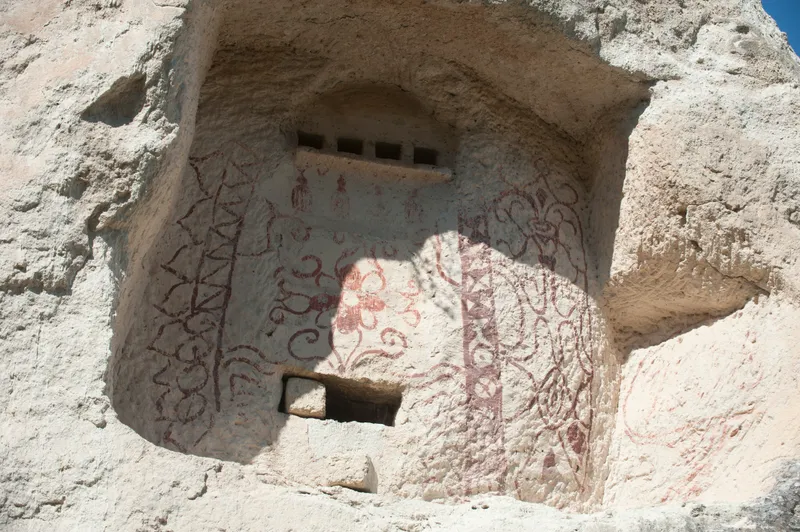
- What: Cappadocia’s cliff-carved pigeon houses were built as practical structures to attract pigeons and collect their droppings for fertilizer, especially for vineyards.
- Where: Cappadocia in central Turkey, especially around valleys near Göreme, Uçhisar, and Ortahisar.
- When: Most surviving examples are associated with the Ottoman era, though pigeon keeping in Anatolia is older.
In Cappadocia, central Turkey, some cliff faces are covered with rows of tiny carved openings and painted facades. They were not shrines or tombs. Many were pigeon houses, cut into the region’s soft volcanic tuff so farmers could collect pigeon droppings for fertilizer.
How Cappadocia Pigeon Houses Worked
The structures were small, but the system was extensive. Farmers carved chambers directly into the rock and added small entrances for birds. On some cliff walls, they decorated the exteriors with arches, geometric patterns, and temple-like fronts. From a distance, the facades can look ceremonial. Their purpose was practical: attract pigeons, shelter them, and make it easier to harvest guano.
That mattered because pigeon droppings were valuable in Cappadocia’s agricultural economy. The region is dry, and improving soil fertility was a constant concern. Guano was especially useful for vineyards, which became a major part of local farming. In a landscape where building material was easy to carve but rich fertilizer was not easy to come by, the cliffs themselves became storage and production space.
Ottoman-Era Dovecotes in Cappadocia
Most of the surviving dovecotes seen today are associated with later centuries of Ottoman-era rural life, although pigeon keeping in Anatolia has much older roots. Across valleys around places such as Göreme, Uçhisar, and Ortahisar, people expanded the practice into a recognizable built network. The pigeon houses were often positioned high on cliff faces, where birds were safer and the openings could be clustered across broad surfaces.
The unusual part is not just that people used pigeons. Many farming societies did. The striking part is how visibly the need reshaped the landscape. In Cappadocia, fertilizer was important enough that agricultural infrastructure became architecture. What looks decorative to modern visitors was also functional design aimed at keeping birds returning to the same carved homes.
Pigeon Guano for Vineyards
That context changes how these cliffs are read. The painted fronts and cut niches were not mainly symbolic curiosities; they were part of a working farm system. In concrete terms, a cliff wall in Cappadocia could serve as a managed pigeon complex, supporting vineyards below with collected droppings carried from those small carved chambers to the fields.
Did You Know?
Pigeon guano was used widely in agriculture because it is naturally rich in nitrogen, phosphorus, and potassium.