
🌿 Stories carved by wind and water
Greater Bulldog Bat in Puerto Rico Catches Fish by Echolocation
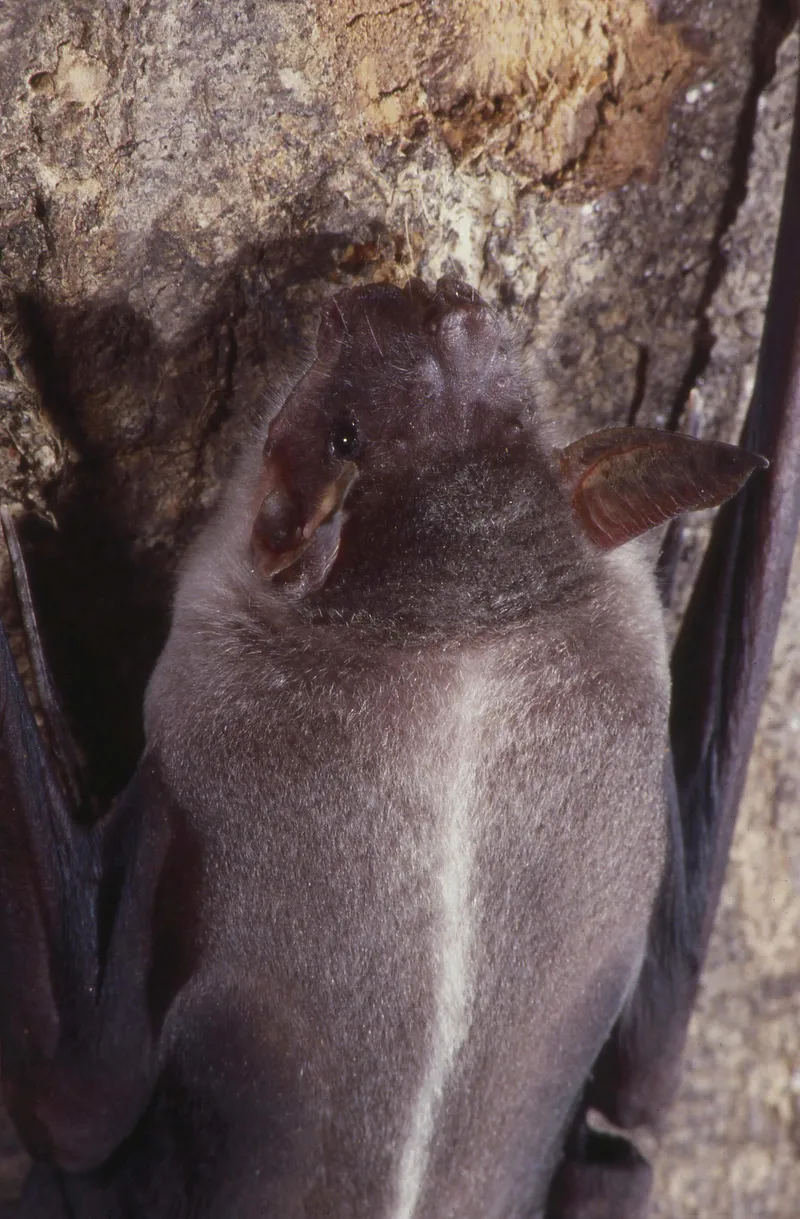
- What: The greater bulldog bat, Noctilio leporinus, is a bat that uses echolocation to detect ripples on the water’s surface and catch fish while flying low overhead.
- Where: Puerto Rico, especially over ponds, lagoons, mangroves, and coastal waters.
- When:
In Puerto Rico, the greater bulldog bat stands out for one specific reason: it catches fish while flying low over water. Known scientifically as Noctilio leporinus, it is one of the few bat species that regularly take vertebrate prey.
How the Greater Bulldog Bat Fishes
The basic idea is simple. This bat patrols above ponds, lagoons, mangroves, and coastal waters, listening for changes at the surface. Instead of chasing insects in open air, it uses echolocation to detect ripples made by fish near the water. Then it drops its large feet, touches the surface, and snatches the prey in motion.
That feeding style makes more sense when you look at the animal itself. The greater bulldog bat has unusually long legs and large claws compared with many other bats. Those features help it skim the water and grab small fish efficiently. It does not live on fish alone everywhere, and its diet can also include insects and crustaceans, but fishing is a well-documented part of its behavior.
Greater Bulldog Bat in Puerto Rico
Puerto Rico is one of the places where this species has drawn attention because the behavior is so visually distinct. A bat crossing low over dark water is already unusual enough to notice. Seeing one repeatedly rake the surface for prey is something else entirely. The movement is controlled and brief, more like precision harvesting than a chaotic strike.
Why This Fishing Behavior Is Rare
The real point of interest is how rare this is among bats. Most bat species feed on insects, fruit, nectar, or blood. Only a small number regularly capture vertebrates, and fewer still specialize in taking fish from the water’s surface. That puts the greater bulldog bat in a narrow group of mammals using sound-based detection to exploit an aquatic food source while staying airborne.
So the hard fact is this: in Puerto Rico, Noctilio leporinus is not just another insect-eating bat passing over a pond. It is a bat with the anatomy and behavior to locate surface ripples by echolocation and lift fish from the water, making it one of the uncommon bat species that regularly hunt vertebrate prey.
Did You Know?
The greater bulldog bat is one of the few bat species known to regularly eat vertebrate prey, not just insects.