
🚀 Whispers from the silent cosmos
Akatsuki Venus Probe Reached Orbit After a Five-Year Recovery
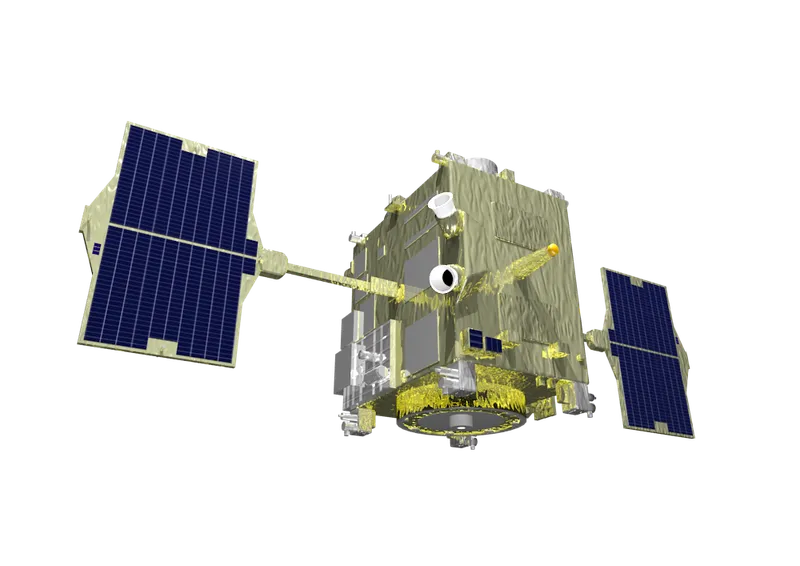
- What: Japan’s Akatsuki Venus probe lost its main-engine orbital insertion in 2010, survived in solar orbit, and successfully entered Venus orbit in 2015 using only its smaller attitude-control thrusters.
- Where: At Venus, after traveling in solar orbit.
- When: 2010 failure, successful retry in 2015.
Most planetary missions fail fast. Japan’s Akatsuki did not. In December 2010, the Venus probe arrived at its target and tried to fire its main engine for orbital insertion. The burn failed, and Akatsuki flew past Venus instead of settling into orbit.
At that point, a miss like that usually ends the mission people expected to succeed. Akatsuki, built by JAXA to study Venusian weather and atmosphere, was suddenly in solar orbit with a damaged propulsion system. Investigators later concluded that a valve problem had caused the main engine to run abnormally during the critical burn. The spacecraft was still alive, but the original plan was gone.
Akatsuki Engine Failure
What happened next is the part that makes Akatsuki unusual. Engineers did not have a healthy main engine to try again. They had to work with the probe’s much smaller attitude-control thrusters, the jets normally used to adjust orientation rather than perform a major orbital capture.
That changed everything about the rescue. The team had to conserve fuel, reshape the spacecraft’s path around the Sun, and wait for another chance to meet Venus. That chance came five years later. In December 2015, Akatsuki approached the planet again and executed a carefully planned insertion using only those secondary thrusters.
Venus Orbit Insertion Retry
This time, it worked. Akatsuki entered orbit around Venus, though not the orbit originally intended. Instead of the initial science plan, the spacecraft ended up in a more elongated path around the planet. Even so, it was close enough to begin returning observations of Venus’s cloud tops, atmospheric waves, and weather patterns.
The reason this stands out is not that it was a miracle or a lucky bounce. It was rare because very few deep-space missions get a second shot at orbital insertion, and fewer still can do it with backup thrusters not meant for the main job. Spacecraft usually carry little excess fuel, and missed planetary encounters do not often line up for another practical attempt.
Backup Thrusters at Venus
Akatsuki’s recovery showed something specific and concrete: a probe written off after a failed Venus arrival in 2010 survived in space long enough to use its smaller control jets to enter Venus orbit in 2015. Not many missions can lose their primary insertion burn, wait half a decade, and still come back with usable science.
Did You Know?
Akatsuki is also known as the Venus Climate Orbiter.