
🏺 Recovered from the dusty archives
Buddha and the Nuns: The Decision That Changed Buddhism
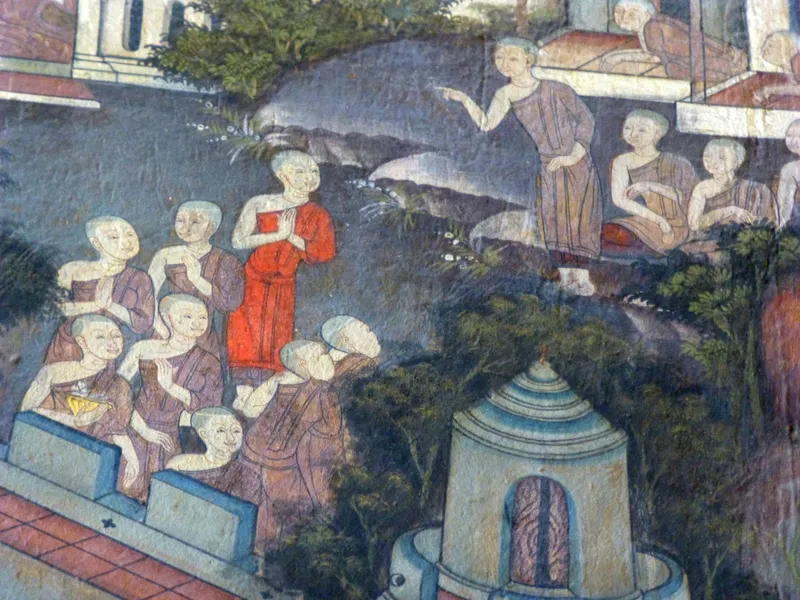
- What: Early Buddhist tradition describes how Ananda persuaded the Buddha to allow women into the monastic order, leading to the ordination of nuns and a lasting change in Buddhist communal life, though the account and its rules are historically debated.
- Where: Early Buddhist communities in northern India.
- When: Traditionally placed around the 5th century BCE.
Early Buddhist tradition preserves a striking scene: the Buddha initially refused to admit women into the monastic order, then reversed course after repeated pleas from his attendant Ananda. The episode, usually linked to Mahapajapati Gotami in northern India around the 5th century BCE, became one of the most consequential decisions in Buddhist history.
Mahapajapati Gotami and Ananda
The story appears in the Vinaya, the monastic disciplinary texts, though details differ across Buddhist traditions. In the best-known version, Mahapajapati Gotami, the Buddha’s aunt and foster mother, asks to enter the sangha. She is refused. Later, after she and other women reportedly shave their heads, put on robes, and follow the Buddha on foot, Ananda intervenes. He asks a direct question: are women capable of attaining the same spiritual goals as men? The Buddha answers yes. After that, women are permitted to join as ordained nuns, usually with additional rules attached.
Vinaya Debate and Nuns' Rules
That is the turning point. It is not a simple victory story, and the sources are debated. Scholars have long questioned how much of this account reflects the Buddha’s own lifetime and how much reflects later monastic editing. The so-called garudhammas, the special rules said to govern nuns in relation to monks, are especially contested. Some researchers see them as later additions; others treat them as early but evolving regulations. There is no single uncontested reading.
Impact of Women’s Ordination
Still, even with those debates, the outcome mattered. Once women could be ordained, Buddhism gained a second monastic track, not just a lay female following. That changed who could study, teach, preserve texts, and pursue liberation within an institutional framework. In some regions, nun lineages later weakened or disappeared; in others, they endured. But the ideal of female renunciation with full religious seriousness had entered the tradition.
The broader consequence was social reach. A movement that might have remained structurally male opened, however unevenly, to women seeking more than devotional support roles. That did not erase hierarchy, and it did not produce equality in any modern sense. But it expanded participation in a way that reshaped Buddhist communities across South Asia and, eventually, much of Asia.
The concrete fact at the center is hard to miss: after Ananda’s intervention, Buddhist tradition remembers women not only as patrons or listeners, but as nuns with ordination, discipline, and recognized paths to awakening. That disputed decision changed who could fully belong to the early sangha.
Did You Know?
Early Buddhist monastic codes survive across multiple Vinaya traditions, which is one reason scholars compare different versions of this story.