
🛍️ Artifacts of human ingenuity
Tylenol Murders Changed Packaging Safety in 1982
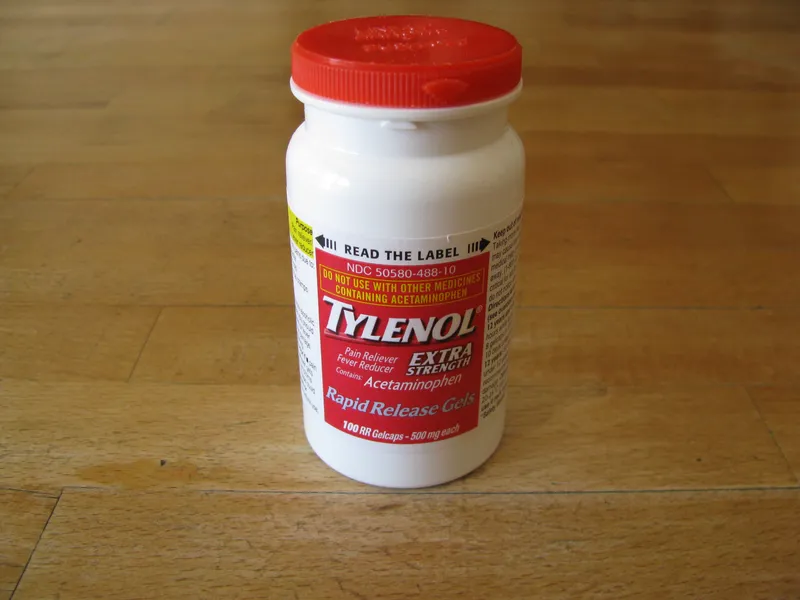
- What: The 1982 Chicago Tylenol murders led to major changes in over-the-counter medicine packaging, making tamper-evident features a standard safety measure.
- Where: Chicago area, United States.
- When: 1982 and the years that followed.
In 1982, the Chicago Tylenol murders changed how over-the-counter medicine was packaged in the United States. What had looked like an ordinary product on a store shelf suddenly became the center of a national safety crisis.
Chicago Tylenol Murders
The event began in the Chicago area, where seven people died after taking Extra-Strength Tylenol capsules that had been laced with cyanide. Investigators concluded the tampering happened after the bottles had reached stores, not during manufacturing. That distinction mattered. It meant a trusted, widely used product could be altered somewhere between the factory and the customer, with no obvious sign from the outside.
Johnson & Johnson, Tylenol’s parent company, responded by pulling millions of bottles from shelves and issuing a nationwide recall. The company also halted advertising and warned the public not to use Tylenol capsules until more was known. The crisis was not just about one brand’s reputation. It exposed a weakness in the way consumer medicines were sold at the time: many packages could be opened and put back into circulation without making tampering immediately visible.
Tamper-Evident Packaging Changes
Out of that weakness came a concrete change. Johnson & Johnson reintroduced Tylenol with tamper-evident packaging, including glued boxes, plastic neck seals, and foil seals over the bottle opening. Those features were designed to make interference easier to detect before use. The company also shifted away from capsules in favor of caplets, which were seen as less vulnerable to this kind of tampering.
Over-the-Counter Safety Standards
The broader effect was specific and lasting. The Tylenol case accelerated pressure for tamper-evident packaging standards across over-the-counter medicines and influenced federal regulation. In the years that followed, visible safety barriers became normal on many consumer health products, not as a branding flourish but as a direct response to a real-world failure.
The lasting implication sits in the package itself. A sealed medicine box, a tight plastic band around a cap, and a foil layer under the lid are now ordinary details. In 1982, they became necessary ones, and Tylenol was the product that made that shift impossible to ignore.
Did You Know?
The crisis helped spur the U.S. Food and Drug Administration to require tamper-evident packaging on many over-the-counter drugs sold in the United States.