
🛍️ Artifacts of human ingenuity
Altoids Tins Became a DIY Electronics Case Staple
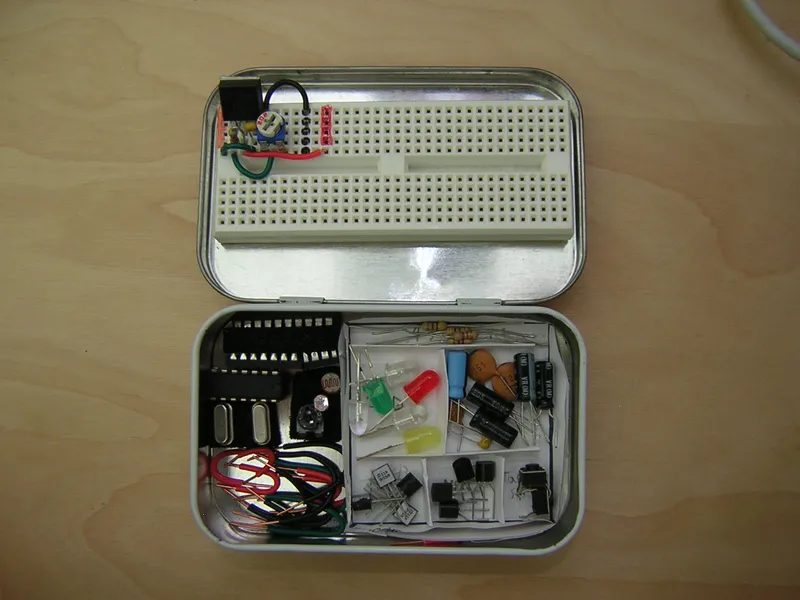
- What: The article explains why Altoids tins became a popular enclosure for DIY electronics projects such as CMoy headphone amps, MintyBoost chargers, small Arduino builds, and some guitar pedals.
- Where:
- When: Especially in the 2000s and before desktop 3D printing became common.
Altoids tins became a go-to enclosure for many hobby electronics projects for a simple reason: the box fit the project. In the 2000s, makers kept reaching for the same small metal mint tin to house CMoy headphone amps, MintyBoost USB chargers, compact Arduino-compatible builds, and even some DIY guitar pedals.
Why Altoids Tins Worked
The appeal was practical, not mysterious. An Altoids tin was cheap, easy to find in stores, small enough for pocket-size circuits, and rigid enough to protect parts better than bare perfboard or loose wiring. Its metal shell also made it easy to drill for switches, jacks, LEDs, and USB ports. For basic one-off projects, it solved a problem before the builder had to think about custom fabrication.
CMoy Amps and MintyBoost
The best-known examples helped turn that convenience into a pattern. CMoy headphone amps, a famously approachable DIY audio project, often landed in Altoids tins because the board, battery, and headphone jacks could be made to fit with careful layout. Adafruit’s MintyBoost made the connection even more explicit. Introduced in the mid-2000s, the small USB charger kit was designed around the idea that a common mint tin could become a portable power pack. The name itself signaled the enclosure.
That logic spread beyond audio and chargers. Small microcontroller builds, especially compact Arduino-compatible projects, could use the tin as a fast, off-the-shelf case for demos, sensors, or simple controllers. Some guitar pedal builders used Altoids tins too, usually for smaller circuits where the dimensions worked, though many full-size stompbox designs needed larger enclosures. It was never the only option, and it was not ideal for every circuit, but it covered a surprising amount of hobbyist territory.
DIY Electronics Before 3D Printing
The broader context matters. Before cheap desktop 3D printing became common and before custom laser-cut or CNC hobby enclosures were as accessible as they are now, builders regularly repurposed everyday objects. The Altoids tin hit a sweet spot between packaging and parts bin: standardized enough to design around, common enough to replace, and distinctive enough that other people instantly understood what they were looking at.
That is why the Altoids tin kept showing up across unrelated projects. It was not just a clever container. It was a ready-made metal case with useful dimensions, easy availability, and just enough durability to become a recurring hardware choice in DIY electronics.
Did You Know?
Adafruit’s MintyBoost kit was specifically named to reflect its mint-tin enclosure.