🚀 Whispers from the silent cosmos
5 Solar System Water Discoveries That Changed Planetary History
- What: This list explains how major discoveries across the solar system overturned the old idea that water was scarce in the inner solar system and showed that water can persist in many different forms and environments.
- Where: Across the solar system.
- When: Modern planetary exploration in the late 20th and early 21st centuries.
For a long time, the simple version of solar system history sounded clean: the inner worlds were mostly dry, water belonged farther out, and comets may have delivered the rest. Then detection after detection began to break that picture.
These five solar system water discoveries mattered because they showed water ice, water-related minerals, and watery chemistry surviving in places that looked hostile, barren, or already understood. The result was a major rewrite of how water is stored and moved across space.
1. Mercury's polar ice — frozen in shadows near the Sun
Mercury is the planet closest to the Sun, which makes this discovery instantly strange. Radar observations, later backed by orbiter data, revealed ice in permanently shadowed craters near Mercury’s poles.
That means a scorching world still has cold traps cold enough to preserve frozen water. It reshaped how scientists think about extreme temperature contrasts on airless worlds and how volatile material can survive in protected pockets.
2. Water on the Moon — beyond a fleeting veneer
The old image of the Moon as bone-dry did not survive modern measurements. Multiple missions detected molecular water signals and hydroxyl on the lunar surface, while shadowed craters showed concentrated ice.
The surprise was not just that water existed, but that it appeared in more than one form and setting. Lunar water detections forced a broader rethink of the Moon’s history and made it harder to treat the lunar surface as simply dry dust in sunlight.
3. Ceres' bright spots — salts and subsurface brines
When Dawn studied Ceres, some of its most eye-catching features were the bright spots. Those spots were linked to salty minerals, especially sodium carbonates, pointing to briny activity below the surface.
This mattered because the story was not just ice sitting still. The chemistry suggested that liquid-rich processes may have shaped parts of the dwarf planet, pushing Ceres into a much more active and water-influenced category than many expected.
4. Enceladus — fountain jets from a hidden ocean
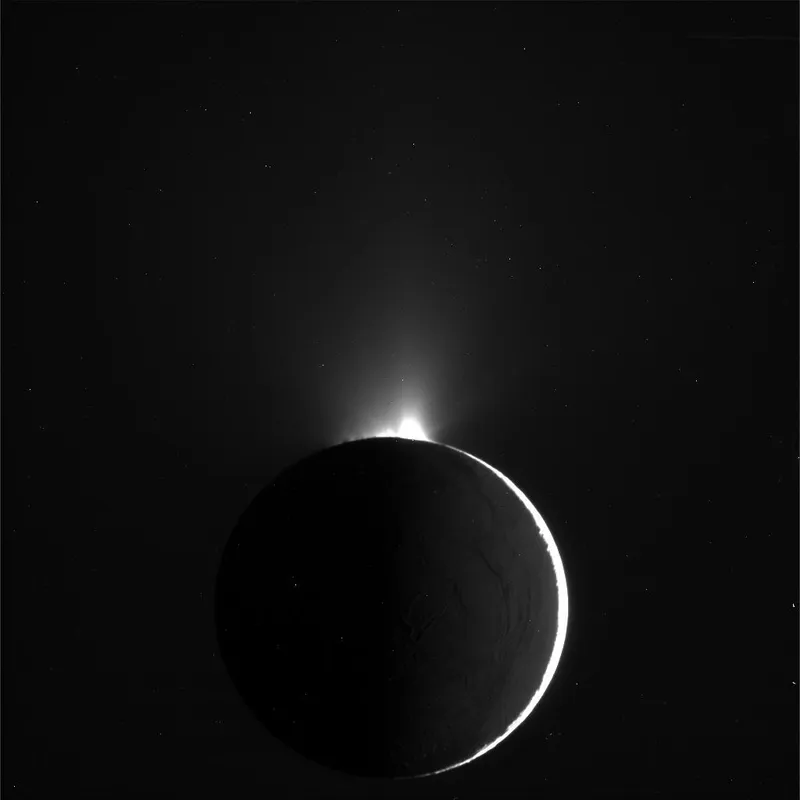
Enceladus delivered one of the most dramatic reveals in planetary science. Cassini observed plume-like jets of water vapor and ice erupting from the moon’s south polar region.
Those plumes pointed to a subsurface ocean and active hydrothermal chemistry. Instead of a frozen moon with little going on, Enceladus became evidence that ocean worlds can stay active and chemically interesting beneath an icy exterior.
5. Cometary water — isotope surprises and Earth links
Comets were often treated as obvious water carriers, but the details became messier. Spectroscopy and sampling showed that comet water has a range of D/H isotope ratios.
Some measurements looked more Earth-like, while others did not. That diversity kept the debate alive over how much of Earth’s water comets could have delivered and showed that “comet water” is not one simple, uniform thing.
Taken together, these discoveries replaced a neat map of where water should be with a stranger, richer one: ice in darkness near the Sun, water signals on the Moon, brines on Ceres, ocean plumes on Enceladus, and comets that refuse to tell one simple origin story.
Did You Know?
Mercury’s polar ice likely survives because some crater floors there have not seen direct sunlight for billions of years.