
🫀 Secrets of the human vessel
Polio Vaccine Switch and the Return of Type-2 Outbreaks
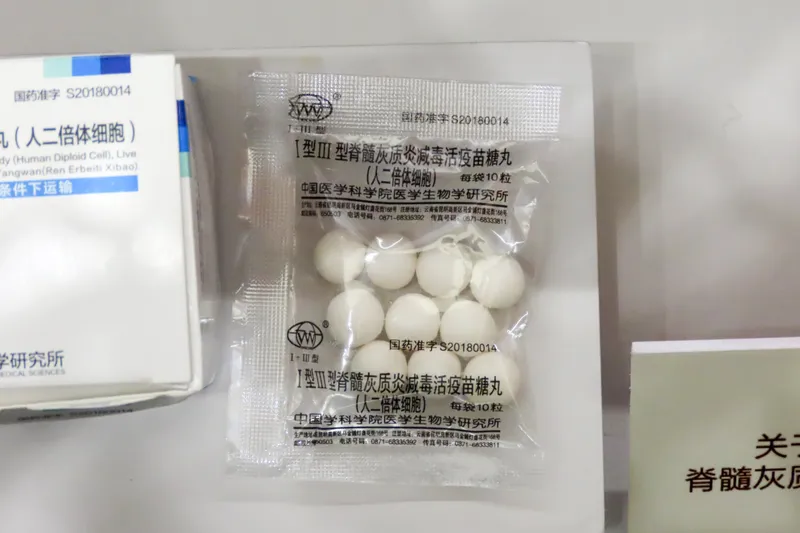
- What: The 2016 switch from trivalent to bivalent oral polio vaccine reduced routine type-2 vaccine exposure but also left some populations with weaker type-2 immunity, allowing circulating vaccine-derived poliovirus type 2 outbreaks to occur where coverage was low.
- Where: Multiple countries in Africa and Asia.
- When: Beginning with the global vaccine switch in 2016.
In 2016, countries around the world made a major polio vaccine change: they stopped using trivalent oral polio vaccine and switched to the bivalent version. The goal was specific. Wild poliovirus type 2 had been declared eradicated, so removing the type-2 component from oral vaccine was meant to reduce the risk of type-2 vaccine-derived poliovirus.
How Type-2 Immunity Gaps Formed
But once that type-2 component disappeared from routine oral vaccination, a new condition emerged. Over time, more children grew up without strong intestinal immunity to type 2. If type-2 poliovirus was later reintroduced into an under-immunized community, it had room to spread.
That is the part that can sound contradictory. Vaccine-derived poliovirus is not the same as wild poliovirus returning. Oral polio vaccine uses a weakened live virus. In places with high vaccination coverage, that virus does its job and transmission stops. In places with low coverage, however, the weakened virus can keep circulating long enough to genetically change. In rare cases, it can regain the ability to cause paralysis and begin spreading as circulating vaccine-derived poliovirus, or cVDPV.
bOPV, IPV, and Type-2 Risk
After the global switch from trivalent OPV to bivalent OPV, type-2 immunity gaps became more important because bivalent OPV protects against types 1 and 3, not type 2. Many countries also introduced at least one dose of inactivated polio vaccine, or IPV, to help maintain protection against paralysis from type 2. But IPV does not generate the same level of gut immunity as oral vaccine, so it is less effective at stopping transmission on its own.
That combination created a narrow but very real vulnerability. If type-2 virus was seeded through an older vaccine strain, an outbreak response campaign, or undetected circulation in areas with weak immunization systems, communities with low type-2 mucosal immunity could see outbreaks emerge. This is why type-2 vaccine-derived poliovirus outbreaks were later reported in multiple countries in Africa and Asia, even after the switch was intended to reduce type-2 risk.
Why Type-2 Outbreaks Returned
The core consequence is not that the switch “caused polio” in any simple sense. It is that a policy designed to remove one source of type-2 risk also required extremely strong population immunity and surveillance to prevent another kind of type-2 risk from opening up. In practice, where coverage was uneven, that immunity gap mattered.
So the concrete implication is clear: the move from trivalent to bivalent oral polio vaccine reduced exposure to type-2 vaccine virus in routine use, but it also left some populations more susceptible to type 2 transmission. That tradeoff became visible only when the virus found pockets of low immunity and started moving again.
Did You Know?
In 2016, countries around the world made a major polio vaccine change: they stopped using trivalent oral polio vaccine and switched to the bivalent version. The goal was specific. Wild poliovirus type 2 had been declared eradicated, so removing the type-2 component from oral vaccine was meant to reduce the risk of type-2 vaccine-derived poliovirus.
How Type-2 Immunity Gaps Formed
But once that type-2 component disappeared from routine oral vaccination, a new condition emerged. Over time, more children grew up without strong intestinal immunity to type 2. If type-2 poliovirus was later reintroduced into an under-immunized community, it had room to spread.
That is the part that can sound contradictory. Vaccine-derived poliovirus is not the same as wild poliovirus returning. Oral polio vaccine uses a weakened live virus. In places with high vaccination coverage, that virus does its job and transmission stops. In places with low coverage, however, the weakened virus can keep circulating long enough to genetically change. In rare cases, it can regain the ability to cause paralysis and begin spreading as circulating vaccine-derived poliovirus, or cVDPV.
bOPV, IPV, and Type-2 Risk
After the global switch from trivalent OPV to bivalent OPV, type-2 immunity gaps became more important because bivalent OPV protects against types 1 and 3, not type 2. Many countries also introduced at least one dose of inactivated polio vaccine, or IPV, to help maintain protection against paralysis from type 2. But IPV does not generate the same level of gut immunity as oral vaccine, so it is less effective at stopping transmission on its own.
That combination created a narrow but very real vulnerability. If type-2 virus was seeded through an older vaccine strain, an outbreak response campaign, or undetected circulation in areas with weak immunization systems, communities with low type-2 mucosal immunity could see outbreaks emerge. This is why type-2 vaccine-derived poliovirus outbreaks were later reported in multiple countries in Africa and Asia, even after the switch was intended to reduce type-2 risk.
Why Type-2 Outbreaks Returned
The core consequence is not that the switch “caused polio” in any simple sense. It is that a policy designed to remove one source of type-2 risk also required extremely strong population immunity and surveillance to prevent another kind of type-2 risk from opening up. In practice, where coverage was uneven, that immunity gap mattered.
So the concrete implication is clear: the move from trivalent to bivalent oral polio vaccine reduced exposure to type-2 vaccine virus in routine use, but it also left some populations more susceptible to type 2 transmission. That tradeoff became visible only when the virus found pockets of low immunity and started moving again.
VideoScript:The polio vaccine was changed to remove type 2. Then type-2 outbreaks showed up anyway.
Here’s why that happened. In 2016, countries switched from trivalent to bivalent oral polio vaccine because wild type 2 was gone. Sounds simple. Less type 2, less risk.
But then immunity gaps grew. Kids were protected against types 1 and 3, while type-2 intestinal immunity faded in some places.
So if a type-2 vaccine-derived strain got back into an under-immunized community, it could spread. The twist is the policy was meant to cut risk. It also made low-coverage areas easier for type 2 to find.
Summary:- What: The 2016 switch from trivalent to bivalent oral polio vaccine reduced routine type-2 vaccine exposure but also left some populations with weaker type-2 immunity, allowing circulating vaccine-derived poliovirus type 2 outbreaks to occur where coverage was low.
- Where: Multiple countries in Africa and Asia.
- When: Beginning with the global vaccine switch in 2016.
The “tOPV to bOPV” switch was coordinated globally over a short, synchronized window in April–May 2016.