🚀 Whispers from the silent cosmos
Soyuz T-13 Revived the Dead Salyut 7 Station
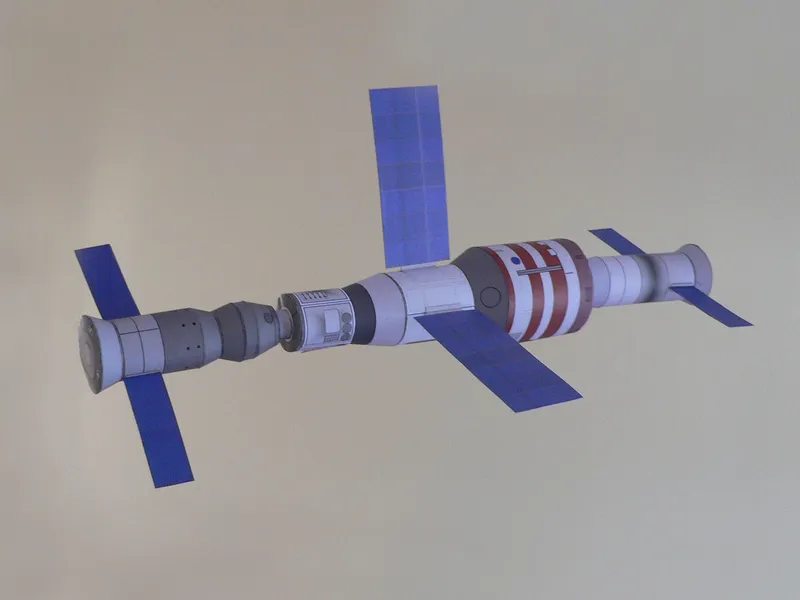
- What: Soyuz T-13 was a Soviet mission in which Vladimir Dzhanibekov and Viktor Savinykh manually boarded the failed Salyut 7 station and restored enough systems to make it habitable again.
- Where: In orbit above Earth aboard the Salyut 7 space station.
- When: June 1985.
In June 1985, in orbit above Earth, Vladimir Dzhanibekov and Viktor Savinykh opened the hatch to Salyut 7 and floated into a space station that was not really alive. The Soviet station had lost contact months earlier after an electrical failure. It was drifting, unlit, and cold. Soyuz T-13 had reached it anyway, and now the repair work had to happen from the inside.
Boarding the Dead Salyut 7
The docking itself was already unusual. Because Salyut 7 had no active guidance, the crew had to approach a silent target and connect manually. Once aboard, they found a station with dead systems, no normal lighting, and temperatures reported to be near freezing. Water had condensed or frozen in places. The air was stale. Equipment was shut down. They were not stepping into a functioning outpost. They were entering a disabled spacecraft and trying to make it usable again.
Salyut 7 Repair in Orbit
The first job was diagnosis. They had to work out what had failed, what still had power pathways, and what could be safely switched back on without overloading the station. This was not a simple reset. Salyut 7 had suffered a serious electrical problem that had cascaded into loss of radio, orientation control, and life support. The cosmonauts used onboard procedures, checklists, and direct inspection to isolate circuits and begin restoring the station section by section.
Power came back gradually, not all at once. As electrical systems were recovered, heaters could be brought online. As temperatures rose, other systems became usable again. Life support was restored step by step. The work took time, and the station did not become comfortable quickly. But the core result was clear: a space station that had been written off as effectively dead was operating again because two crew members had entered it, traced the failure by hand, and rebuilt enough of the system to sustain habitation.
Soyuz T-13 Mission Legacy
That is what makes Soyuz T-13 compelling. The mission was not just about reaching a troubled station. It was about doing fault isolation and recovery in orbit, inside the failed vehicle itself, with limited tools and limited margin. The consequence was bigger than one repair. It showed that orbital stations were not necessarily lost the moment automation failed. Human crews could diagnose, improvise, and restore complex spacecraft in ways ground controllers alone could not.
Salyut 7 returned to operation after the Soyuz T-13 mission, and that concrete outcome is the point. In 1985, the Soviet program proved that a dark, frozen station could be boarded, powered back up, and made livable again by the people already inside it.
Did You Know?
The crew’s manual docking helped turn Soyuz T-13 into one of the earliest major in-orbit rescue-and-repair missions in spaceflight history.