
⚙️ Traces from the dawn of innovation
Scientists Create Living Robots That Can Self-Replicate
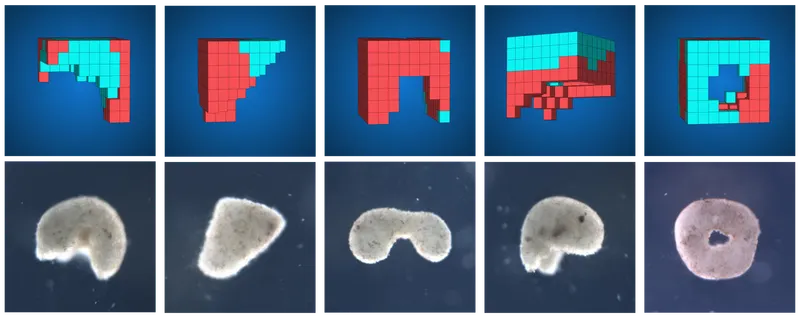
- What: Scientists have developed xenobots, living robots made from frog cells that can self-replicate and perform specific tasks.
- Where: Tufts University and collaborators.
- When: 2021.
In a groundbreaking study conducted in 2021, scientists unveiled a remarkable innovation: xenobots. These living robots, crafted from frog cells, have the astonishing ability to self-replicate under specific laboratory conditions.
Using a unique combination of biological and technological principles, researchers at Tufts University programmed these xenobots to exhibit behaviors previously thought impossible for synthetic organisms. The tiny robots, measuring just a fraction of a millimeter, were designed to carry out specific tasks, such as moving or even healing themselves.
What makes these xenobots truly fascinating is their self-replicating capability. In a controlled environment, they can assemble new, functional organisms. This incredible process challenges traditional notions of robotics and biology, blurring the lines between the two fields.
The implications of this research are vast. Imagine a future where these programmable organisms could be used in medicine, environmental cleanup, or even as bioengineered assistants. While the potential is exciting, it also raises ethical questions about the manipulation of living cells.
As scientists continue to explore the capabilities of xenobots, the world watches closely. This technology could redefine our understanding of life and robotics, paving the way for innovations we have yet to imagine.
Did You Know?
Xenobots were created using a combination of living cells and computer algorithms, showcasing a novel approach to bioengineering.