🌿 Stories carved by wind and water
6 Organisms That Build Glass-Like Silica Structures
- What: The article surveys six kinds of organisms that often take up dissolved silica and turn it into rigid, glass-like structures for support, defense, and long-term environmental records.
- Where: Oceans, wetlands, grasslands, and terrestrial plant habitats worldwide.
- When: Present-day biology, with some silica structures also persisting long after the organisms die.
Nature keeps reinventing the same material. In oceans, wetlands, and grasslands, some organisms pull dissolved silica from their surroundings and turn it into rigid, glass-like parts.
These natural silica structures are not decorative accidents. They help with support, defense, and even with how bodies sink or stay suspended. Here are six organisms that build with what is essentially biological glass.
1. Diatoms
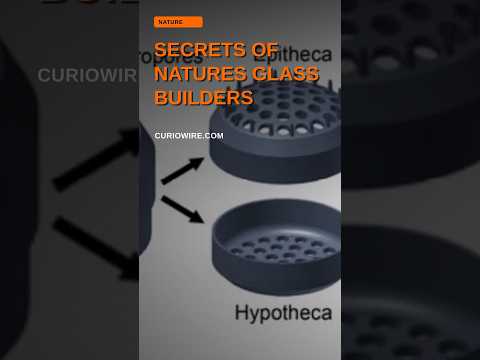
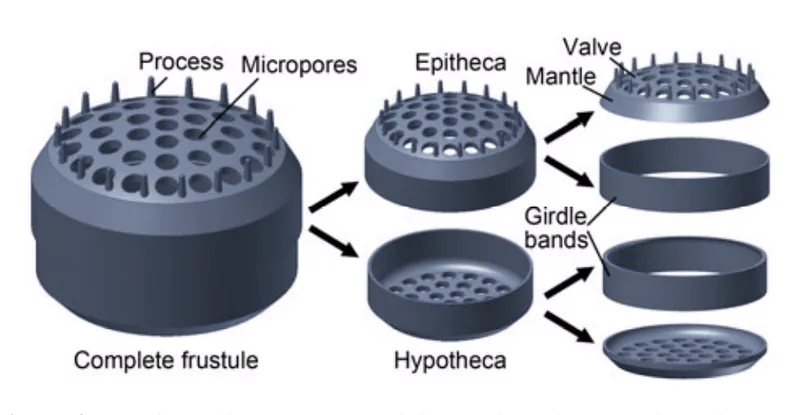
Diatoms are single-celled organisms, but their outer shells are anything but simple. They secrete silica frustules, intricate microscopic cases that look like tiny glass houses patterned with striking precision.
What makes them especially surprising is how useful those structures remain long after the cells die. Diatom frustules are widely used in paleoenvironmental and water-quality reconstructions, turning these tiny silica shells into records of changing conditions.
2. Radiolarians
Many radiolarians drift as plankton, building delicate silica skeletons often marked by radiating spines. They look fragile, but they are part of a much bigger story unfolding in the open ocean.
When radiolarians die, their silica remains can accumulate on the seafloor as siliceous ooze. That means countless microscopic skeletons can help form an entire sediment layer, linking tiny glassy bodies to large-scale marine deposits.
3. Glass sponges (Hexactinellida)
Glass sponges take silica architecture to another level. They fuse silica spicules into latticed skeletons, creating frameworks that can reach meter scale.
The surprise lies in their durability. These silica frameworks can persist for centuries, showing how an animal can build a long-lasting structure from dissolved silica and turn a soft-bodied life form into something almost architectural.
4. Spicule-forming demosponges
Many demosponges also use silica, but in a different way. They form silica spicules and knit them together with spongin, producing supportive internal meshes.
That matters because it is another animal route to glassy structural parts. Instead of one fused lattice like a glass sponge, these organisms create a reinforced network that still relies on silica for strength and form.
5. Horsetails (Equisetum)
Horsetails bring silica onto land in a very practical form. These plants pack abrasive silica into their stems and epidermis, making their surfaces noticeably rough.
That roughness is more than just texture. It can deter herbivores, and it also explains why horsetails were historically used as a natural sandpaper. In this case, plant tissue becomes a silica-loaded defensive surface.
6. Phytolith-producing grasses
Many grasses deposit microscopic silica bodies called phytoliths in their leaves and stems. These tiny mineralized structures are another way living tissue turns dissolved silica into a durable, glass-like component.
The remarkable part is what remains behind. Phytoliths can persist in soils, leaving a durable silica record that archaeologists use to reconstruct past plant presence and activity long after the original grass has vanished.
From single cells to sponges to common plants, silica keeps showing up as one of nature’s most effective building materials: rigid, intricate, and built for survival.
Did You Know?
Diatomaceous earth, made from accumulated fossil diatom shells, is used commercially as a filtration material and mild abrasive.