
🫀 Secrets of the human vessel
Shoe-Fitting Fluoroscopes Exposed Shoppers to Unnecessary X-Rays
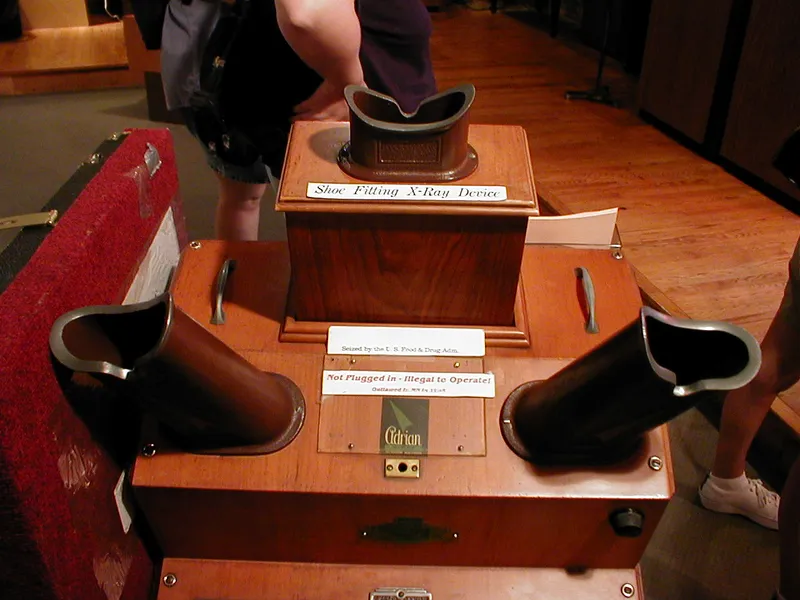
- What: Shoe-fitting fluoroscopes were X-ray machines once used in shoe stores to let customers see how shoes fit, but they were later removed because the radiation exposure was unnecessary.
- Where: Shoe stores in the United States, Britain, and other countries.
- When: From the 1920s through the mid-20th century, with broad disappearance by the 1970s.
They were sold as a sign of modern retail, not a warning sign. In shoe stores across the United States, Britain, and elsewhere from the 1920s through the mid-20th century, shoe-fitting fluoroscopes let customers look at the bones in their feet while trying on shoes.
The pitch was simple: step onto the machine, slip your feet into the new shoes, and peer through a viewer to see how the fit looked inside. For store owners, it seemed scientific. For parents buying children’s shoes, it looked precise. And for many shoppers, it turned a routine purchase into a small technological event.
X-Ray Exposure in Shoe Stores
The problem was not one dramatic accident. It was repetition. These machines used X-rays, and people were often exposed again and again with no medical reason. Children might try on multiple pairs. Sales clerks, who stood beside the machines all day, could receive much more exposure over time. Radiation output also varied widely between machines, especially before consistent regulation and maintenance standards were enforced.
By the 1940s and 1950s, researchers and regulators were paying closer attention to unnecessary radiation in everyday settings. Concerns grew that shoe-fitting fluoroscopes offered little real benefit compared with ordinary shoe fitting, while adding avoidable exposure. Medical and public-health authorities increasingly questioned why an X-ray device was being used to sell footwear at all.
Why Fluoroscopes Were Removed
Cancer risk from radiation depends on dose and duration, and not every person who used one of these machines faced the same level of danger. But the broader conclusion became hard to ignore: the exposure was unnecessary, especially because safer ways to fit shoes already existed. Over time, professional criticism, tighter state rules, and changing public attitudes pushed the machines out of stores. By the 1970s, they had largely disappeared.
The consequence reached beyond shoe shopping. Shoe-fitting fluoroscopes became a clear example of how consumer technology can feel advanced long before its risks are taken seriously. The machine did not fail because it was ineffective at making an image. It failed because that image was not worth the radiation.
Public Health Lesson
What remains is a very specific public-health lesson. For decades, a device designed for retail convenience put X-ray exposure into children’s shoe departments and shopping districts. The end of the shoe-fitting fluoroscope was not just the retirement of an odd machine; it was recognition that routine consumer sales did not justify routine radiation.
Did You Know?
Some shoe-fitting fluoroscopes had viewing ports for the customer, the salesperson, and even the child’s parent, so multiple people could look at the foot bones at once.