
🧪 Echoes from the lab
Physarum Slime Mold Recreated a Tokyo-Like Rail Network
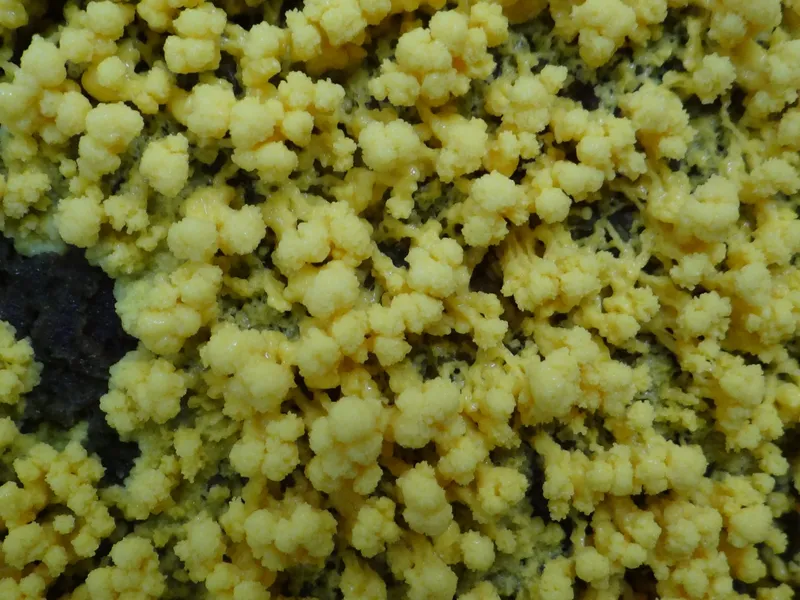
- What: Physarum slime mold can form efficient transport networks that resemble the Tokyo rail system by reinforcing useful tubes and shrinking less useful ones.
- Where: Tokyo, Japan.
- When:
Physarum slime mold is a single-celled organism with no brain, but in a well-known lab setup, it formed a transport network that closely resembled the Tokyo rail system. The result became a striking example of how efficient routes can emerge from simple local rules rather than central planning.
How Physarum Forms Networks
The basic idea is straightforward. Physarum polycephalum spreads out in thin, vein-like tubes as it searches for food. Those tubes are not random for long. Paths that carry more nutrients tend to thicken and persist, while less useful branches shrink away. Over time, the organism keeps a network that balances reach, cost, and resilience.
Tokyo Rail Network Experiment
Researchers tested that behavior using a map-based experiment in Japan. They placed oat flakes at positions corresponding to the greater Tokyo area and major urban locations around it. The slime mold started from one point and expanded across the surface. As it connected the food sources, the final pattern looked notably similar to the existing rail network around Tokyo.
That did not mean the organism “understood” cities or transportation. It was not solving a rail-planning problem in the human sense. What it was doing was repeatedly adjusting its tubes based on nearby conditions: where food was, how flow changed, and which links were efficient enough to maintain. When many of those tiny adjustments were added together, the larger pattern resembled a human-built system designed for moving resources across crowded space.
Why the Slime Mold Result Matters
That is the part often misunderstood. The interesting finding is not that slime mold is secretly thinking like an engineer. It is that some network problems can be approached without a brain at all. Efficient structures can arise when a system constantly reinforces useful routes and drops wasteful ones.
This is why the Tokyo experiment still gets cited in discussions of network design, biology, and computation. A wet, spreading organism on a lab surface produced a rail-like layout by optimizing nutrient transport locally. In concrete terms, it showed that under the right constraints, a brainless slime mold and a major metropolitan rail system can converge on surprisingly similar shapes.
Did You Know?
Physarum polycephalum is often studied as a model organism for understanding how decentralized systems can solve routing problems.