🏆 Legends born in the arena
6 Stadiums That Move or Swap Grass Fields to Save Turf
- What: This list highlights stadiums that use specialized engineering to keep natural grass viable despite heavy event schedules, including movable pitches, retractable sections, grow lights, and rapid turf replacement.
- Where: Major multi-use stadiums in Europe, Japan, and the United States.
- When: Modern stadium operations in the contemporary era.
Natural grass is fragile. Concert rigs, extra sports, and closed roofs can wreck it quickly.
That is why some stadiums in Japan, Arizona, London, the Netherlands, Germany, and Amsterdam use unusual engineering to keep real grass alive. In a few venues, the whole pitch moves. In another, the grass is replaced quickly enough to survive a packed event calendar.
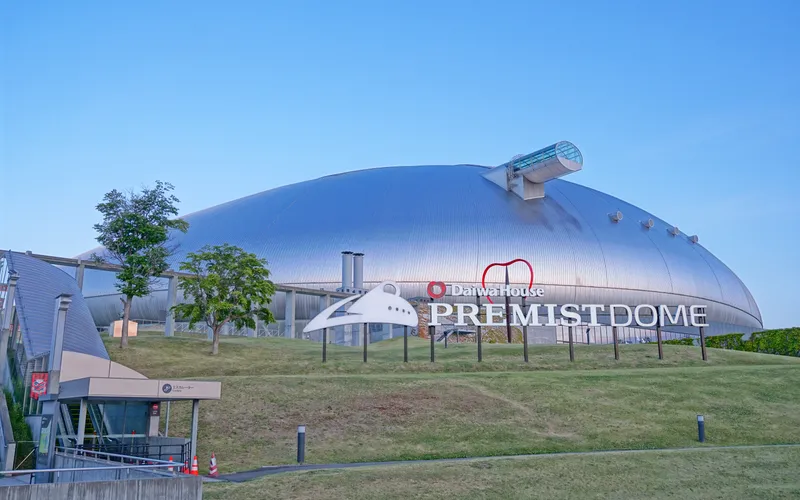
1. Sapporo Dome (Japan)
Sapporo Dome became one of the clearest examples of a stadium treating grass like a living machine part. Its natural-grass soccer pitch sits on a giant tray that slides completely outside the dome between matches.
That is the surprise: the field does not just get covered or patched. It actually leaves the building for sunlight and maintenance, then returns for games. In a roofed venue, that solves the core problem of keeping real grass healthy.
2. State Farm Stadium (Arizona)
At State Farm Stadium, the Cardinals’ natural-grass field sits on a single tray weighing more than 18 million pounds. The entire surface rolls outdoors so the grass can get sunlight.
What makes it matter is flexibility. While the field is outside, the stadium bowl can host other events without grinding down the turf. It is not a small repair trick. It is the whole field moving out of the way.
3. Tottenham Hotspur Stadium (London)
Tottenham Hotspur Stadium uses a different idea. Instead of sending the pitch outside, its grass surface is split into three retractable sections that slide under the South Stand.
That movement reveals a dedicated NFL surface below. The switch is surprising because it is an indoor swap, not an outdoor rollout. The result is the same goal: protecting the main grass while letting the venue handle another sport without asking one field to survive everything.
4. GelreDome (Arnhem, Netherlands)
GelreDome was an early European example of a convertible pitch system. Its field can slide out of the roofed bowl into the open air.
That mattered because concerts and other indoor events could go on while the grass recovered outside. Instead of forcing the turf to live permanently in a covered environment, the stadium physically gives it a better place to breathe and heal.
5. Veltins-Arena (Gelsenkirchen, Germany)
At Veltins-Arena, Schalke 04’s turf sits in a movable tray that rolls out on rails. When it is outside, the grass gets light and care before coming back in for football.
The clever part is how directly the system answers a modern stadium problem. Large indoor shows need floor space. Real grass needs protection. Moving the entire surface lets the venue do both without pretending a tarp alone can solve it.
6. Johan Cruijff ArenA (Amsterdam)
Johan Cruijff ArenA does not use a roll-out tray, but it belongs in this group because it tackles the same problem from another angle. The venue relies on high-tech grow lights and rapid replacement of pre-grown natural-grass surfaces between concerts and matches.
That quick-change approach is less dramatic than watching a pitch slide outside, but it is still unusual. When a stadium calendar gets crowded, sometimes the solution is not moving the field. It is swapping in a fresh natural-grass surface quickly enough to keep events coming.
Different countries reached the same conclusion: if a stadium wants real grass and nonstop use, the field cannot stay ordinary.
Did You Know?
Sapporo Dome hosted matches at the 2002 FIFA World Cup.