
🌿 Stories carved by wind and water
Surtsey Island Was Closed So Scientists Could Watch Life Arrive
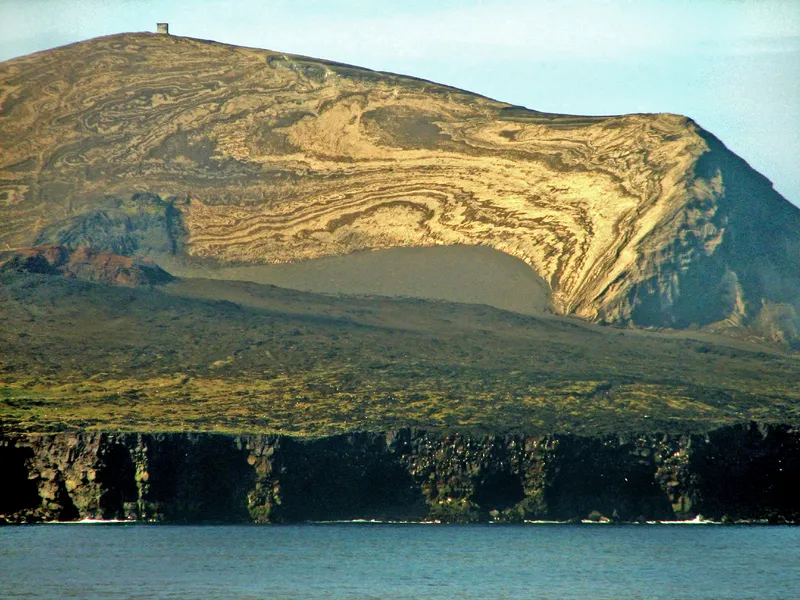
- What: Surtsey is a protected volcanic island used by scientists to study how life colonizes brand-new land through ecological succession.
- Where: Off Iceland’s south coast.
- When: The island formed in a volcanic eruption that began in 1963 and continued into 1967.
Surtsey, off Iceland’s south coast, is a rare natural experiment on Earth: a brand-new island that people mostly stayed off so scientists could watch how life colonizes fresh land.
Surtsey’s Volcanic Birth
The island appeared during a volcanic eruption that began under the sea in 1963 and continued into 1967. What emerged was raw ground: lava, ash, and almost nothing else. Usually, when a new place becomes accessible, people land on it quickly, build paths, carry seeds on their boots, and change the story before anyone can measure the beginning. On Surtsey, Iceland chose a different approach. The island was protected, and access was kept tightly restricted, mainly to researchers, so the first decades of change could be documented with as little human interference as possible.
How Life Reached Surtsey
That made Surtsey less a tourist destination than a baseline. Scientists could ask a simple but unusually hard question: when bare land appears, what gets there first, and how? Wind brought microbes, fungal spores, and plant material. Ocean currents delivered drifting seeds and other debris. Birds arrived too, and they changed the island faster than the rock alone could have. Once seabirds began nesting, they carried in nutrients and seeds, enriching the soil with guano and helping vegetation spread in ways that bare volcanic ground would not allow on its own.
The broad concept is ecological succession, but Surtsey gave researchers a clean example. Instead of reconstructing the past from fragments, they could watch the process unfold almost from year one. Early plants established in some areas and failed in others. Mosses and lichens appeared. Later, more complex plant communities developed, especially where birds concentrated. Insects also arrived, some blown in, some carried, some associated with plants and birds. The island became a record of arrival, survival, and gradual ecosystem building.
Why Surtsey Is Restricted
What makes Surtsey unusual is not just that it is young. New volcanic land exists elsewhere. The rare part is the restraint. Very few places are protected quickly enough, and strictly enough, to preserve the opening stages of colonization before tourism, settlement, or accidental introductions blur the evidence.
That decision still shapes what Surtsey is today. It remains heavily restricted, and the island’s value is concrete: a place where scientists can compare notes across decades and see, with unusual clarity, how birds, plants, insects, and soil begin assembling an ecosystem on new land.
Did You Know?
Surtsey was designated a UNESCO World Heritage Site in 2008.