
🚀 Whispers from the silent cosmos
Apollo 17 Lunar Sample Opened After 50 Years
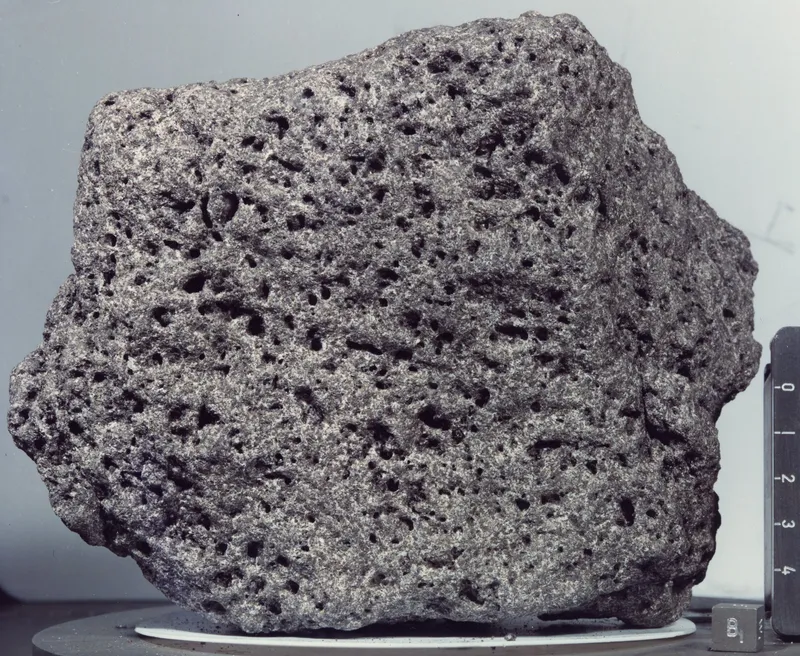
- What: NASA opened Apollo 17 core tube 73001 in 2022 to study lunar material and trapped gases that had been sealed since 1972.
- Where: Taurus-Littrow Valley on the Moon.
- When: Collected during Apollo 17 in December 1972 and opened by NASA in 2022.
In 2022, NASA opened a carefully preserved Apollo-era Moon sample: core tube 73001, collected during Apollo 17 in December 1972. The sample had been vacuum-sealed for about 50 years so future scientists could study material and gases preserved from the lunar surface with better tools than the mission team had at the time.
Apollo 17 Sample 73001
The opening was part of NASA’s Apollo Next-Generation Sample Analysis program, which revisits selected samples that were intentionally left untouched. Sample 73001 came from the Taurus-Littrow Valley landing site, where astronauts Eugene Cernan and Harrison Schmitt drove a core tube into a landslide deposit and brought back layered lunar soil. Unlike many other Apollo samples, this one was sealed in a way meant to retain volatile components as much as possible.
When scientists finally opened it, the process was slow and controlled. NASA teams first extracted gases released from the container before fully removing the lunar material. That mattered because the gas itself was part of the science. Researchers wanted to know what, if anything, had remained trapped since Apollo 17, and how well the sample had preserved evidence of the Moon’s volatile history and outgassing behavior.
Recovered Gases and Lunar Volatiles
The result did not overturn lunar science, but it was important. Preserved gases were recovered, indicating that the sealed approach had protected scientifically useful material. Combined with the layered core itself, those gases help researchers study how the lunar surface interacts with the space environment, how volatiles may be stored or lost over time, and what processes affected the deposit where the sample was collected.
The key insight is how rare this kind of test is. Scientists cannot rerun Apollo 17, and they cannot recreate a 1972 lunar core that stayed sealed for half a century. Sample 73001 is valuable not just because it came from the Moon, but because it serves as a time capsule of both lunar material and Apollo-era curation strategy. It lets modern instruments examine a question that earlier labs were not equipped to answer in the same way.
Why the Sealed Core Matters
That gives the sample a concrete role beyond historical interest. By comparing the recovered gases, the sediment layers, and the companion core collected nearby, scientists can better estimate how lunar volatiles were trapped, altered, or released at Taurus-Littrow. A tube sealed on the Moon mission’s final landing in 1972 ended up delivering new measurements in 2022, which is why NASA saved it unopened in the first place.
Did You Know?
Sample 73001 was part of NASA’s Apollo Next-Generation Sample Analysis program, which is designed to revisit Apollo samples that were intentionally left unopened for future study.