
🚀 Whispers from the silent cosmos
Hayabusa Returned Asteroid Dust Despite Sampling Failure
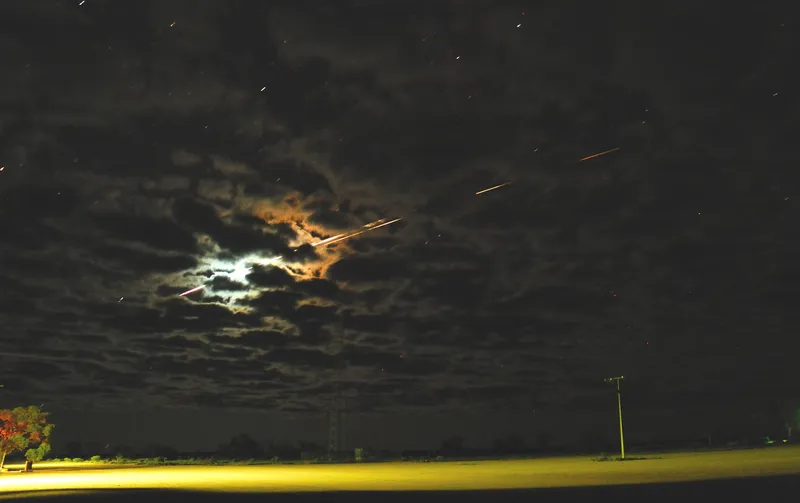
- What: Hayabusa returned confirmed asteroid samples from Itokawa even though its planned sampling projectile appeared not to fire correctly, with tiny grains later identified by electron microscopy.
- Where: Asteroid Itokawa; the return capsule landed in Australia.
- When: Sampling occurred in 2005, and the capsule returned to Earth in 2010.
Hayabusa looked like it had missed its shot, yet it still brought part of an asteroid back to Earth. That is the core of one of JAXA’s most unusual mission outcomes: a sample return that seemed compromised during collection but succeeded when scientists searched at microscopic scale.
Hayabusa Itokawa Sampling Attempt
The key moments happened in 2005 at asteroid Itokawa, a small near-Earth asteroid visited by Japan’s Hayabusa spacecraft. The mission plan called for Hayabusa to touch down and fire a small projectile into the surface, kicking up material that would be captured for return. But after the touchdowns, there were strong indications that the sampling projectile had not fired as intended.
That did not mean the spacecraft had returned empty. It meant nobody could assume it had succeeded either. When Hayabusa’s return capsule landed in Australia in 2010, JAXA scientists opened it and began a careful search for anything that might have come from Itokawa.
Electron Microscopy of Itokawa Grains
The evidence was tiny. Using scanning electron microscopy, or SEM, to inspect material inside the capsule, researchers identified particles that matched what would be expected from asteroid grains rather than contamination from Earth or the spacecraft itself. Those grains then had to be isolated through micro-extraction, one by one. In the end, JAXA reported roughly 1,500 micrometer-scale grains from Itokawa.
That result matters because the mission is often remembered in a simplified way: the shot failed, therefore the sample failed. But those are not the same thing. Even without the projectile working as planned, contact with the asteroid during touchdown appears to have been enough for tiny particles to enter the sampling system. The mission hardware did not operate exactly as designed, yet the spacecraft still carried back real asteroid material.
Confirmed Asteroid Sample Return
This is the misconception the Hayabusa story corrects. Space missions are often described as either success or failure, especially when one visible step goes wrong. In practice, the data can sit in the gray area for years until instruments and patient analysis settle the question. In Hayabusa’s case, the proof was not dramatic footage or a full canister of dust. It was microscopic grains identified through lab work after the capsule was already back on Earth.
So the concrete outcome is this: Hayabusa became the first mission to return confirmed samples from an asteroid, and that confirmation rested on particles so small they had to be found with electron microscopy and extracted individually. What first looked like a failed collection event still produced physical evidence from Itokawa.
Did You Know?
Hayabusa was Japan’s first asteroid sample-return mission.