
🌿 Stories carved by wind and water
Honeyguide Birds Lead Humans to Wild Beehives
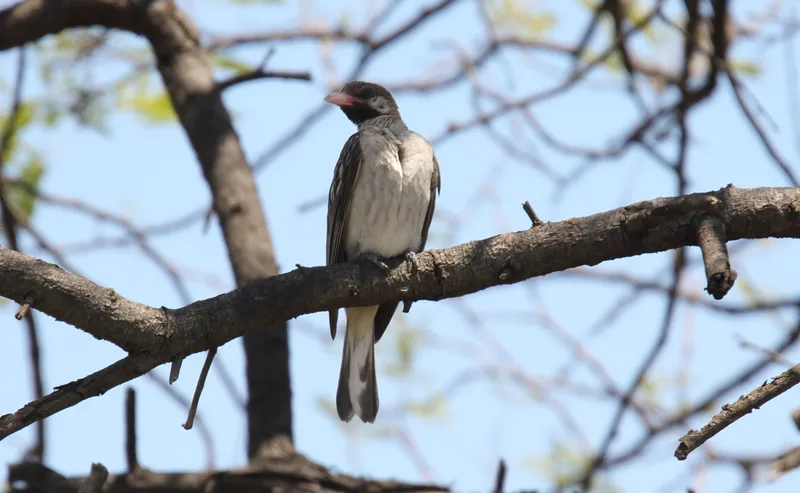
- What: The greater honeyguide is a bird that can lead humans to wild beehives, allowing people to collect honey while the bird later feeds on wax and larvae left behind.
- Where: Parts of Africa, including Mozambique, Tanzania, and Kenya.
- When:
In parts of Africa, a small bird called the greater honeyguide is known for doing something unusual: it can lead people to wild beehives. Human foragers get honey. The bird gets access to wax, bee larvae, and other remains left behind after the hive is opened.
How Honeyguides Lead People
This is not just a loose coincidence. Researchers and local communities have documented the behavior in several regions, including Mozambique, Tanzania, and Kenya. The bird uses a distinct call and conspicuous movement to attract attention, then flies ahead in stages, waiting for people to follow. When the group reaches a hive hidden in a tree cavity or another hard-to-find place, humans use smoke, tools, and experience to open it. Only after that can the bird feed.
The arrangement works because each side does what the other cannot easily do alone. The honeyguide is good at locating bee nests across large areas. Humans are much better at handling defensive bees and breaking into the hive. For the bird, an intact hive is a sealed food source. For people searching woodlands and savannas, a guide can reduce time and uncertainty.
Yao Honey-Hunting Calls
One well-known example comes from northern Mozambique, where Yao honey-hunters have traditionally used a specific call to recruit honeyguides. Field studies have suggested that birds are more likely to respond to that call than to other human sounds. That does not mean every bird responds every time, and the exact learning process is still studied, but the repeated pattern is strong enough to stand out.
Why This Human-Bird Partnership Stands Out
What makes this relationship remarkable is how rare it is. Many animals feed near humans, and many species exploit leftovers, but documented cases in which a wild animal actively guides humans to food and then benefits from the result are uncommon. It is a practical exchange, not a symbolic one: locate, follow, open, feed.
That concrete sequence matters. A honeyguide moving from branch to branch can turn an invisible hive into a shared resource, and once the honey is removed, the bird can finally reach the wax and larvae that were inaccessible minutes earlier.
Did You Know?
The greater honeyguide is a rare example of a wild animal that cooperates with people to obtain food.