
🌿 Stories carved by wind and water
Tollund Man Preservation Explained by Denmark's Peat Bog Chemistry
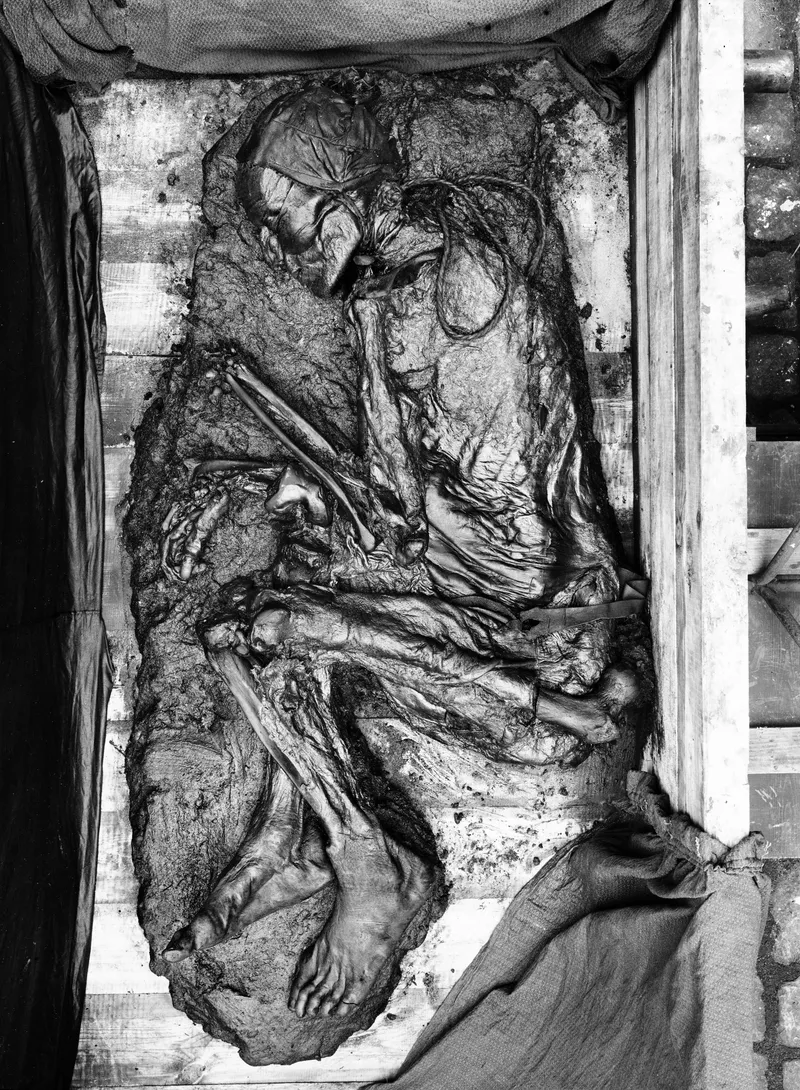
- What: Tollund Man is an Iron Age bog body whose remarkable preservation in a peat bog made him look recently deceased when he was found.
- Where: Near Silkeborg on the Jutland peninsula in Denmark.
- When: He died more than 2,000 years ago and was discovered in 1950.
When Tollund Man was found in Denmark in 1950, his face looked so recent that the people who uncovered him initially thought they had found a modern body. In fact, he had died more than 2,000 years earlier, during the Iron Age, and had been preserved in a peat bog with remarkable detail still visible in his skin and facial stubble.
Peat Bog Preservation Conditions
The key was the bog itself. If a body ends up in a landscape that is cold, waterlogged, acidic, and low in oxygen, the usual process of decay slows dramatically. In a peat bog, sphagnum moss helps create exactly those conditions. The moss releases compounds that acidify the water, and the bog’s saturated ground keeps oxygen out. Without much oxygen, the bacteria that normally break down soft tissue have far less ability to work.
Then another part of the process takes over. The acids in the bog can tan human skin in a way that is often compared to leather production. Soft tissues may survive, while bones can lose minerals and become more fragile because of the same acidic environment. That is one reason bog bodies can appear visually intact even after centuries or millennia underground. In Tollund Man’s case, his features remained so well defined that archaeologists could study his face, the stubble on his chin, and the cap and belt found with him.
How Tollund Man Was Preserved
Tollund Man was discovered near Silkeborg on the Jutland peninsula, and he has become one of the best-known bog bodies ever recovered in Europe. His preservation was not the result of a single unusual moment but of a stable chemical setting maintained over a very long time. Cold temperatures limited biological activity. Acidic water altered the tissues. Oxygen-poor mud sealed the body away from the normal agents of decomposition.
Why Bog Bodies Survive
That context matters because Tollund Man is not just an isolated archaeological curiosity. He is part of a wider pattern seen in northern Europe, where peat bogs have preserved human remains, clothing, and organic materials that would usually disappear. These finds show how much local environments can shape what survives from the past.
The hard fact is that Tollund Man’s body endured for over two millennia not because it escaped nature, but because one very specific natural system in a Danish peat bog changed the normal chemistry of decay.
Did You Know?
Tollund Man’s head is now on display at the Museum Silkeborg in Denmark.