
🌿 Stories carved by wind and water
Mangrove Propagules Can Cross Oceans and Start Forests
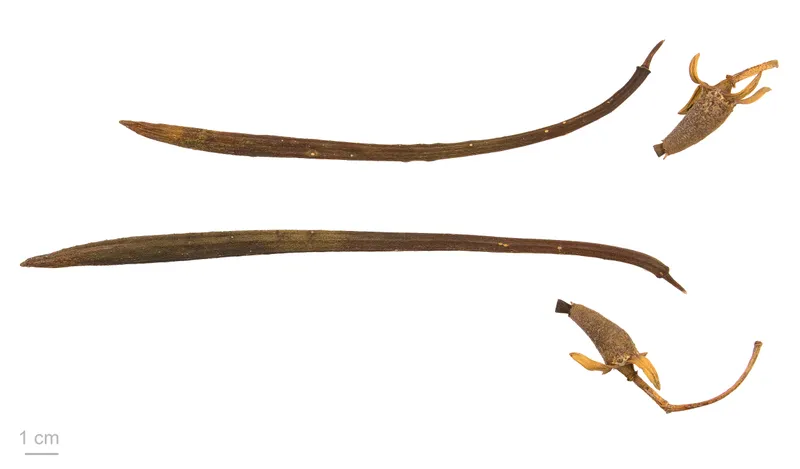
- What: Mangrove trees such as Rhizophora can disperse by releasing buoyant living propagules that float on seawater, travel long distances, and root when they reach suitable mud or sand.
- Where: Tropical and subtropical coasts, especially across the Indo-Pacific.
- When:
Mangrove trees can send out living seedlings that drift at sea for months. In species such as Rhizophora, the seed begins growing while still attached to the parent tree, producing a long, buoyant propagule that can drop into tidal water, stay afloat, and travel far beyond the original shoreline.
How Mangrove Propagules Disperse
That early growth is the key. Instead of releasing a dormant seed and waiting for the right conditions, these mangroves release a ready-made starter plant. The propagule has stored energy, a tough outer surface, and buoyancy that helps it survive in salt water. Ocean currents can carry it along coasts or across open stretches of sea. When it reaches shallow mud or sand and becomes lodged in place, it can quickly root and begin forming a new stand of mangroves.
This is not just a local shuffle from one creek to the next. Long-distance dispersal has helped mangroves colonize islands and rebuild shorelines after disturbance. Across the Indo-Pacific, Rhizophora species are found on widely separated coasts and islands, and floating propagules are one reason they can appear far from the parent forest. Studies have shown that some mangrove propagules remain viable in seawater for weeks to months, long enough for currents to move them substantial distances.
Long-Distance Mangrove Colonization
The example matters because a single successful arrival can change a coastline. Once mangroves establish, they trap sediment, slow water movement, and create shade and structure at the shore. That alters which plants can take hold after them. In some places, a bare or sparsely vegetated tidal edge can shift into a dense mangrove fringe over time, reshaping the local plant community in a very literal, physical way.
How New Mangrove Forests Start
The consequence is straightforward: mangroves are not confined to where they already grow. Their propagules give them a built-in transport system, and that helps explain how coastal forests can spread, reconnect, or appear on distant islands without human planting. On a muddy tropical shoreline, a pencil-shaped Rhizophora propagule stuck upright in the sediment is not debris. It is the first visible stage of a possible new mangrove forest.
Did You Know?
Mangrove propagules can be so buoyant that some species can float while remaining viable and ready to develop roots and shoots.