
🏺 Recovered from the dusty archives
How Ancient Roman Concrete Outlasts Modern Materials
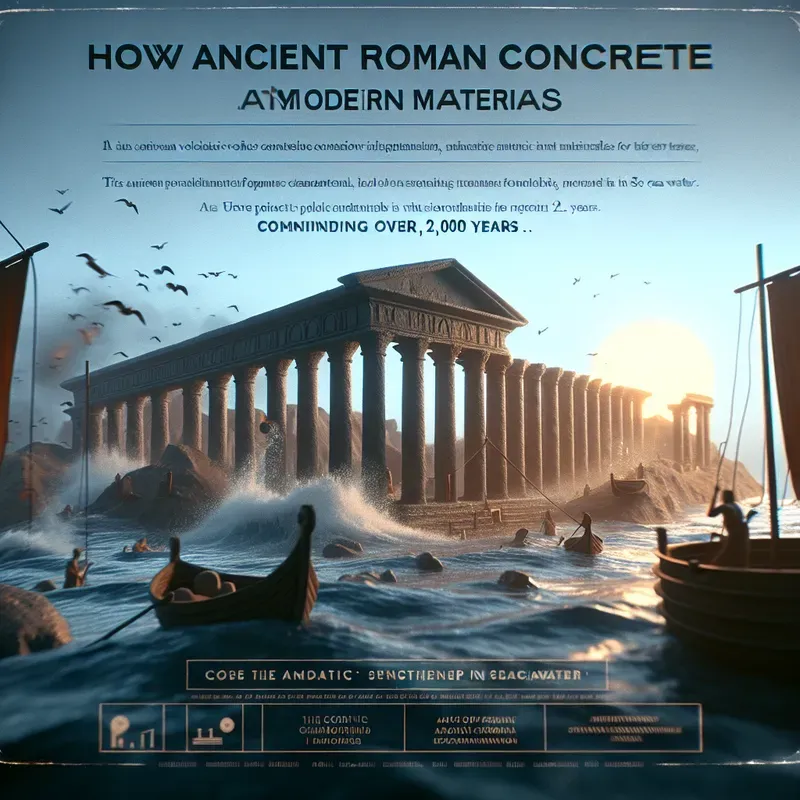
- What: Roman volcanic-ash concrete, known as opus caementicium, has unique properties that allow it to strengthen in seawater, making it durable for over 2,000 years.
- Where: Ancient Rome, specifically marine structures like the Port of Pozzuoli near Naples.
- When: Over 2,000 years ago.
In the bustling ports of ancient Rome, a remarkable building material was quietly making history: volcanic-ash concrete.
This innovative mixture, known as opus caementicium, was not just strong; it had a unique ability to strengthen in seawater.
While modern concrete often deteriorates in marine environments, Roman concrete has stood the test of time, with structures still intact after 2,000 years.
Researchers have discovered that the secret lies in the volcanic ash, which reacts with seawater to form minerals that reinforce the concrete.
In fact, some marine structures built by the Romans, like the Port of Pozzuoli near Naples, remain resilient against waves and erosion.
This ancient technology challenges our understanding of durability and sustainability in construction.
As architects and engineers seek inspiration from the past, the legacy of Roman concrete continues to influence modern practices.
Did You Know?
The Pantheon in Rome, built with Roman concrete, has the largest unreinforced concrete dome in the world, still standing after nearly 2,000 years.